Liveaboard.com

Fujikawa Maru Liveaboard Diving

Our guests rated liveaboard diving in Fujikawa Maru as 8.6

  • 100% Best Price Guarantee

Liveaboard Diving in Fujikawa Maru

What To Expect On A Fujikawa Maru Liveaboard

Liveaboards diving the Fujikawa Maru, in Micronesia, will transport divers to one of the many Japanese Naval ships which sunk in in WWII and have now become an impressive wreck dive. This ship in particular was a cargo and passenger ship which had been transported to Chuuk lagoon for repairs when in 1944 operation Hailstone, and attack by the Americans, sunk it through a torpedo strike, along with many more ships and aircrafts. After so many years of being submerged, it has created its own, tiny, ecosystem with many different species for divers to admire and because of this it has become the most popular wreck dive in Chuuk Lagoon. There are currently 2 liveaboards that operate cruises to dive on the Fujikawa Maru.

What You Can See

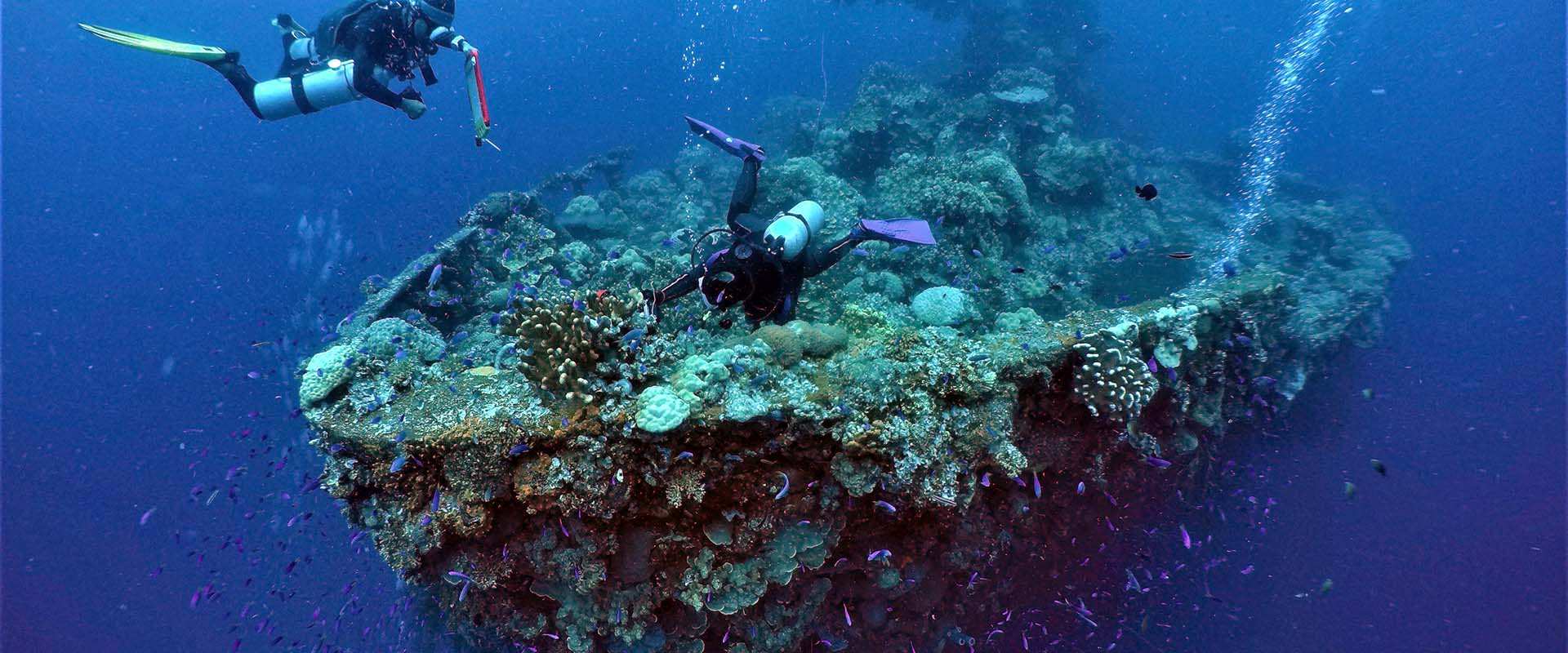
Fujikawa Maru measures at 133m (437ft) and due to it still standing upright, divers get a full visual of the whole structure. The depth it lies at rages from 5m (15ft) down to 37m (120ft) and the deck lies at 18m (60ft) which means that certified divers of all leveler able to dive around the wreck. The outside of the wreck is decorated with many colourful soft corals, large heads of hard corals and sea sponges of all shapes and sizes. There is silt all around and inside the wreck, so do be careful when swimming, to minimize the amount that is stirred as that will drastically affect the visibility which is usually around 25m (75ft).

If you want to penetrate the wreck whilst on your liveaboard cruise, then you will have to be a certified wreck diver, but luckily if you're not then you can still see a lot just swimming around it. You will be able to see the impressive bow gun and the two fighter aircrafts which are inside of the holdings. If you are able to penetrate this wreck you will be able to swim through the engine room and other storage and work areas. Here you will see many artifacts including artillery. Unfortunately the wreck is damaged in some places due to dynamite fishing, but this does allow for divers to see more of the inside of the wreck. As for marine wildlife you will see, this wreck inhabits large schools of Jacks and Barracuda and there are often very curious Grey Reef Sharks hanging around.

Getting To Fujikawa Maru

Chuuk lagoon, where Fujikawa Maru is located, is in the Caroline Islands within the Federation of Micronesia, and can be accessed on a Micronesia liveaboard the capital city of the state of Chuuk is Weno where a third of the entire Chuuk state population live. Weno has an international airport called Chuuk International Airport. There are only three airlines which fly to Chuuk, with the main route being via Guam from Honolulu with United Airlines. They are not multiple flights a day so you definitely need to check flights so you are not stopping over in Guam for lengthy layovers. Once in Weno there are multiple dive shops with which you can go on day trips to the lagoon or you can join a liveaboard which will also spend some days in the area and then you can visit many of the sites. But please do remember to check any requirements for a liveaboard.




What to know about diving in Fujikawa Maru

Where is the Fujikawa Maru wreck?

The Fujikawa Maru rests in Truk (Chuuk) Lagoon in Micronesia's Chuuk State, one of more than 50 Japanese vessels sunk there during World War II. It's widely considered the lagoon's signature wreck and is usually the first one visiting divers explore.

How deep is the Fujikawa Maru?

The wreck sits upright with its shallowest point around 30 ft (9 m) and the seabed at about 111 ft (34 m), with the main deck at roughly 59 ft (18 m). That range makes it accessible to recreational divers while still offering deeper penetration options for the more experienced.

When did the Fujikawa Maru sink?

It sank on February 18, 1944, during Operation Hailstone, the surprise US carrier raid that caught much of Japan's Pacific fleet at anchor in Truk Lagoon. Multiple torpedo and bomb hits sent it down, loaded with aircraft parts and ammunition.

What can you see inside the Fujikawa Maru?

The forward holds hold disassembled Japanese Zero fighter parts, including a rare A5M "Claude" fighter and an intact cockpit with dials and switches still in place. The engine room preserves intact machinery and an air compressor nicknamed "R2D2" by divers, while the superstructure holds a galley, bridge, and even tiled bathtubs.

Why is the Fujikawa Maru famous among wreck divers?

It combines everything divers look for in a wreck dive: accessible depths, remarkable historical artifacts (including actual fighter plane parts), an intact structure, and decades of coral growth that make it as beautiful as it is historic. It's frequently ranked among the best wreck dives in the world.

What type of ship was the Fujikawa Maru?

It was a Japanese armament transport ship, carrying aircraft parts, ammunition, and supplies for Japan's Pacific Fleet when it was sunk. Its cargo is exactly what makes the interior so interesting to explore today.

Can beginners dive the Fujikawa Maru?

Yes, to an extent — the shallow main deck, around 30–60 ft (9–18 m), is accessible to divers with basic open-water certification when accompanied by a guide, though entering cargo holds or the engine room is better suited to those with wreck-diving experience. Most liveaboards tailor the dive plan to the group's certification level.

What marine life lives on the Fujikawa Maru?

Decades underwater have coated the wreck in pink and white soft corals and sponges, which now shelter schools of tuna, barracuda, and smaller reef fish. The marine growth has turned what was once a warship into one of Chuuk's richest artificial reefs.

How do you dive the Fujikawa Maru?

It's dived from a day boat or liveaboard based out of Weno, Chuuk's main island, usually as one of the first wrecks on a Truk Lagoon itinerary given its manageable depth and iconic status. Multiple dives are often scheduled to cover the bow, cargo holds, engine room, and superstructure separately.

Is there aircraft wreckage on the Fujikawa Maru?

Yes — its forward cargo holds contain disassembled Japanese Zero fighter fuselages and parts, including a preserved cockpit, making it one of the best places in Truk Lagoon to see WWII aircraft up close. This is one of the wreck's biggest draws for history-minded divers.

How long is the Fujikawa Maru?

The ship measures roughly 435 ft (132 m) long, a sizeable armament transport that gives divers plenty to explore across multiple dives. Its upright, largely intact position makes navigation more straightforward than many of the lagoon's more broken-up wrecks.

Can you penetrate the Fujikawa Maru's interior?

Yes, with the right training — divers with wreck certification can access the engine room, cargo holds, and parts of the superstructure, while less experienced divers typically stick to the open deck and holds. Guides tailor the route to the group's comfort and certification level.

What is the water visibility like at the Fujikawa Maru?

Visibility in Truk Lagoon typically runs 40–60 ft (12–18 m), sometimes better in the dry season from November to April, giving divers a good view of the wreck's silhouette from a distance before descending. Visibility can drop after heavy rain stirs up lagoon sediment.

What should I bring to dive the Fujikawa Maru?

A dive light is useful for peering into holds and the engine room, and a wide-angle camera captures both the coral-covered exterior and the aircraft parts inside. Wreck-certified divers heading into tighter interior spaces should also carry a reel and backup light.

Why did the Fujikawa Maru sink in Truk Lagoon?

It was one of dozens of ships caught by surprise during Operation Hailstone in February 1944, when US carrier aircraft attacked what Japan had considered a secure, heavily defended fleet anchorage. The raid effectively ended Truk's role as a major Japanese naval base and left the lagoon floor scattered with wrecks.

We’re here to help, 24/7.

Connect with our expert travel consultants to plan your next trip.

  • Oksana Kovaleva
  • Farah Celada-Benito
  • Andrea Martinez
  • Ester Canali
  • Juliane Ball
  • Mylene Issartial
  • Josue Zarco