Liveaboard.com

Punta Vicente Roca Liveaboard diving

Our guests rated liveaboard diving in Punta Vicente Roca as 9.1

  • 100% Best Price Guarantee

Liveaboard Diving in Punta Vicente Roca

What To Expect On A Punta Vicente Roca Liveaboard

Liveaboards to Punta Vicente Roca in the Galapagos will provide a myriad of marine life to see in this fantastic part of the world. Sitting on the west coast of Isabella Island, the largest of the Galapagos islands. Isabella is also one of the younger Galapagos islands and is constructed of 5 active and one extinct volcano. Wolf volcano has experienced eruptions as recently as 2015, threatening rare wildlife on the island such as the pink iguana which exists nowhere else in the world.

Many people say Isabella is in the shape of a seahorse and Vicente Roca sits on its mouth. The area has stunning landscapes and fantastic sea caves for liveaboard visitors. No land visits are permitted to Punta Vicente but many people come here to experience the diverse marine life.

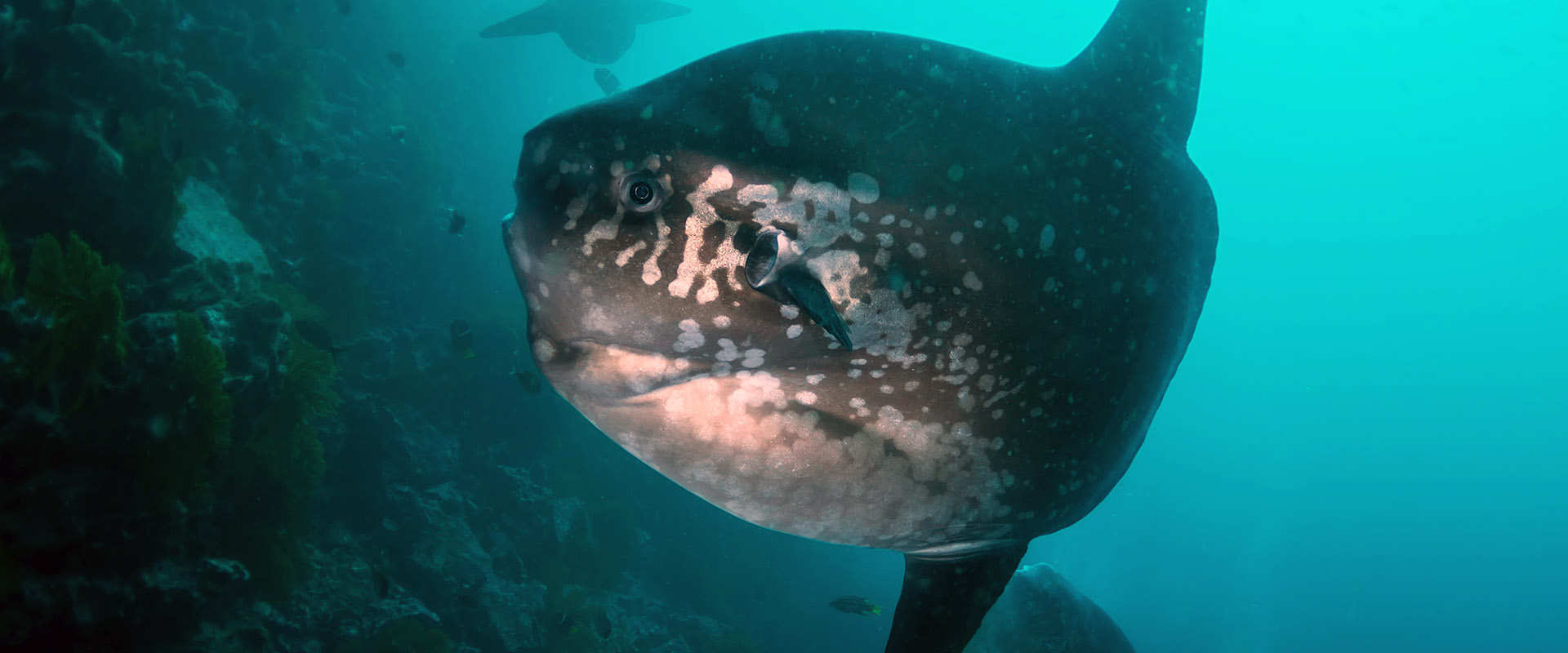
The liveaboard diving available here is along a wall that drops down to around 28 meters/90 ft. Near the shore there are many sea lions and Galapagos penguins who drop down to see divers. In deeper parts of the wall this is the best place to see the Mola Mola or sunfish. They follow the cool currents here and there is a chance that Orcas might be giving chase. Mola Mola is one of their favourite foods.

Daily Schedule

Morning - Most Galapagos liveaboards prefer to start as early as possible, before the day boats arrive. This will mean a light breakfast before a quick briefing and straight to the dive deck for 6:30 am. The first dive will be along the wall at Punta Vicente Roca where the current and swell can be very heavy. Divers will be dropped by panga tender and normally make a negative descent onto the wall. Your dive should be around 50 minutes or less if the current is very strong.

Afternoon - The second dive will be after a proper breakfast and will normally be a little further along the wall nearer to the cave. There will be some swim-throughs and if you encountered Mola Mola on the first dive this is your chance to get closer to shore and dive with the penguins and sea lions.

Punta Vicente Roca Underwater

Punta Vicente Roca is a long sloping underwater wall that reaches 28 meters/90 ft. The shallower areas are thick with aquatic life, this is a fantastic place to encounter penguins which pop down, gracefully darting around divers. Sea lions are also very playful here, they are often seen in the water swimming with snorkelers and divers.

The main attraction on a Punta Vicente Roca dive cruise though, are the Mola Mola or sunfish. These huge oddly-shaped pelagics come here because of the strong cold ocean currents. They can be seen in the blue near to the wall at Punta Vicente Roca, although Mola can be quite shy and easily scared away so divers should approach gently. It is also worth noticing that Mola are an attractive food source to Orcas which have been known to hunt in the area. You have to be quite lucky to see Orca while diving, but in Galapagos it is possible.

Top Tips for Punta Vicente Roca

  • Stay slow and steady while swimming, the current here can be some of the strongest in Galapagos.
  • Spend some time by the shore as well as looking for Mola Mola there are penguins and sea lions aplenty in the shallows.
  • An SMB is a necessity, the area is full of snorkelers and dingys visiting the caves.
  • Wear a lot of thermal protection this is one of the coldest dive sites in Galapagos.

Getting to Punta Vicente Roca

Getting to the Galapagos Islands from Ecuador is relatively easy. Most flights are around a 2-hour transit from Guayaquil and Quito which both have international airports serving worldwide airlines. The most frequent flights are with airlines LAN, Tame and Avianca. Be sure to give a few days extra when flying from Quito, volcanic activity around the city can cause delays.

Isabella is one of the central Galapagos islands and is frequently visited by Galapagos liveaboards during their tour. It is a few hours sail from some of the other main dive sites such as Cabo Douglas and Cabo Marshall. Day boats do travel to Punta Vicente but it is on the remote uninhabited side of Isabella island making it one of the longer daytrips.


Punta Vicente Roca Diving Reviews

  • Rating 9.1 out of 10
  • 9.1 Superb
  • Rating 8.8 out of 10
  • 8.8 Fabulous
  • Justin H
  • Flag of United StatesUnited States

Surrounded by a bait ball, sea lions hunting, black tips, turtles, eels and more!

Diving Punta Vicente Roca in August on the Galapagos Sky
  • Rating 7.6 out of 10
  • 7.6 Good
  • Julie R
  • Flag of United StatesUnited States

We saw the mola mola here, both on the surface and underwater. Such a great experience!

Diving Punta Vicente Roca in February on the Calipso Dive
  • Rating 9.6 out of 10
  • 9.6 Exceptional
  • Carsten A
  • Flag of United StatesUnited States

Amazing mola mola encounters! Dive leaders did a great job getting us to them.

Diving Punta Vicente Roca in February on the Tiburon Explorer
  • Rating 9.6 out of 10
  • 9.6 Exceptional
  • Steve W
  • Flag of United StatesUnited States

Great to see penguins and more iguanas

Diving Punta Vicente Roca in March on the Galapagos Sky


What to know about diving in Punta Vicente Roca

What is Punta Vicente Roca known for?

Punta Vicente Roca, on the northwestern tip of Isabela Island, is known for its cold, nutrient-rich waters that attract unusual species such as mola mola (ocean sunfish), red-lipped batfish, and the endemic, nocturnal Galápagos bullhead shark. It's one of the more offbeat, biodiversity-dense dives in the archipelago.

Where is Punta Vicente Roca located?

It sits at Isabela Island's northwestern point, near Ecuador Volcano, in the far western reaches of the Galapagos, where the cold Cromwell Current wells up from the deep. That upwelling is what makes the site's marine life so distinct from the warmer central islands.

How deep is Punta Vicente Roca?

The dive starts along a shallow wall full of crevices before dropping to a steep drop-off that reaches about 164 ft (50 m). Most of the memorable sightings happen in the shallower, crevice-filled sections rather than at maximum depth.

Why is the water so cold at Punta Vicente Roca?

Cold water wells up from the deep-water Cromwell Current, making this one of the chilliest dive sites in the Galapagos despite the archipelago's equatorial location. That cold, nutrient-rich water is exactly what attracts species like mola mola and seahorses.

Can you see mola mola (sunfish) at Punta Vicente Roca?

Yes, occasionally — mola mola, the largest bony fish in the ocean and able to grow up to 10 ft (3 m) long, are among the site's signature (if unpredictable) sightings. They tend to show up more often during the cooler upwelling season.

What other marine life can you see at Punta Vicente Roca?

Divers can spot red-lipped batfish, frogfish, and seahorses tucked into the wall's crevices, plus schools of barracuda and salema, electric rays, and occasionally marlin passing through open water. The endemic, nocturnal Galápagos bullhead shark also rests on the bottom here during the day.

What certification do you need to dive Punta Vicente Roca?

Given the cold water, strong currents, and drift-diving conditions, most operators recommend Advanced Open Water certification and comfort with variable visibility. Guides will typically call off the dive if conditions turn unfavorable on the day.

What should I wear to dive Punta Vicente Roca?

A thick wetsuit, 7mm or more, or even a drysuit for those who own one, is strongly recommended given the site's notably cold upwelling water, some of the coldest in the Galapagos. Hood and gloves are also worth considering for comfort on longer dives.

Is night diving allowed at Punta Vicente Roca?

Night diving has historically been restricted at the site, largely for safety given its currents and remoteness, so check current park regulations with your operator before planning one. Most itineraries schedule it as a daytime dive.

How do you get to Punta Vicente Roca?

It's accessible only by boat as part of a Galapagos liveaboard itinerary covering the western islands of Isabela and Fernandina, well outside the range of a day trip from the main towns. It's typically grouped with Cabo Douglas and Cabo Marshall on a western-islands route.

What is the current like at Punta Vicente Roca?

Currents can be strong, and the site is usually dived as a drift dive rather than against a fixed line, so divers follow the current rather than fight it. Brief the guides closely on entry and exit points given the conditions.

Why is Punta Vicente Roca considered a unique dive site?

The combination of cold Cromwell Current upwelling, dramatic volcanic wall terrain, and species found almost nowhere else together, like mola mola alongside tropical reef fish, makes it one of the most ecologically unusual dives in the Galapagos. It rewards divers willing to brave the colder water.

Are there penguins near Punta Vicente Roca?

Galápagos penguins are found in the wider area around Isabela and Fernandina, including nearby coastlines, though the dive site itself is better known for its cold-water fish and invertebrate life than for penguin encounters. Nearby snorkeling stops are often a better bet for penguin sightings.

What should I bring to dive Punta Vicente Roca?

Beyond a thick wetsuit, a dive light helps for peering into the wall's crevices where batfish, frogfish, and seahorses hide, and a camera is worth having given the site's unusual mix of species. A surface marker buoy is wise given the drift-diving conditions.

How does Punta Vicente Roca compare to Cabo Douglas?

Both sit in the cooler western Galapagos, but Punta Vicente Roca leans toward macro life and oddball cold-water species like mola mola, while Cabo Douglas is known more for marine iguanas and penguins interacting with divers. Many Western-island itineraries dive back-to-back for the contrast.

We’re here to help, 24/7.

Connect with our expert travel consultants to plan your next trip.

  • Mylene Issartial
  • Josue Zarco
  • Andrea Martinez
  • Nina Kapp
  • Juliane Ball
  • Farah Celada-Benito
  • Oksana Kovaleva