Liveaboard.com

Northern Atolls Liveaboard Diving

Our customers rated liveaboard diving in Northern Atolls as 8.9.

  • 100% Best Price Guarantee

Liveaboard Diving in Northern Atolls

What To Expect On A Northern Atolls Liveaboard

Northern Atoll liveaboards take divers to the large expanse of ocean north of Maldives' Central Atolls which opened to liveaboard diving in the not-too-distant past. Visitors can enjoy the quintessential Maldives diving experience without the crowds. The Northern Atolls contain some dive sites that are famous throughout the country for unique and special characteristics or reef inhabitants. However, the area is equally recognized for offering a high-quality, well-rounded underwater scene, with abundant reef fish, interactive topography, and blue-water visitors.

Northern Atolls Underwater

Liveaboard dive cruises to the Northern Atolls is diverse. It's got pinnacles, channels, walls, and bays. The marine life that surrounds you as you descend from your dive dhoni will probably be equally diverse. Some areas are known for large and plentiful reef fish, and some get regular visits from mantas and other pelagics. Sharks have their special spots within Noonu, Lhaviyani, and the Far North Atolls. In addition, the Northern Atolls hold many sites with particularly unique topography, making for memorable dives, either because of the quantity and variety of interactive features, or because the reef simply looks unlike any other.

Dive Areas Of The Northern Atolls

Due to the variety of dive sites and atolls available to divers a Maldives dive liveaboard is the best option to explore the area.

Baa Atoll
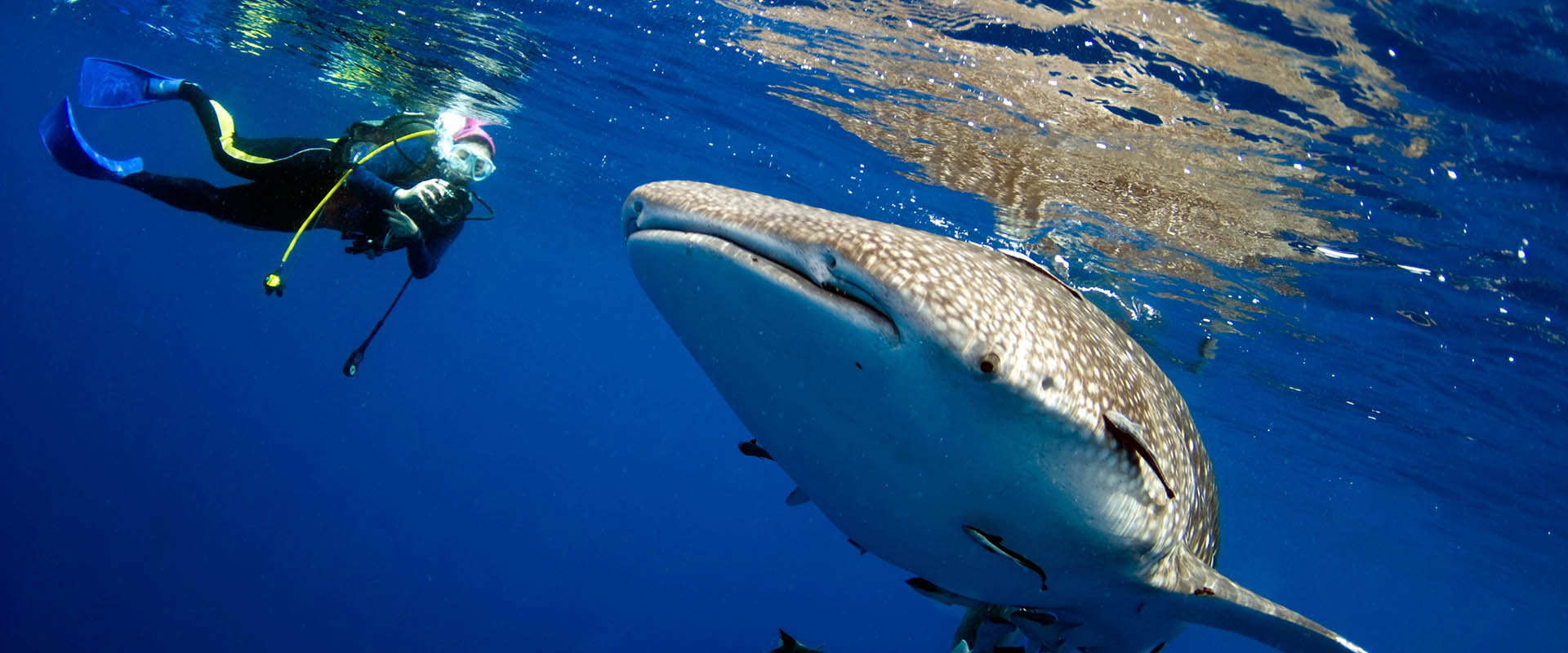
is known for having loads and loads of fish, great variety of species, interactive topography, and good manta-viewing. Baa also lays claim to one of the Northern Atolls unique offerings: a famous underwater landscape of blue, green, and yellow soft corals at the dive site Maavaru Kandu. Dive cruises visit Baa's various channels and pinnacles for the chance to mix seriously impressive fish biomass with fun swim-throughs and overhangs. To top it off, Baa's World Biosphere Reserve Hanifaru Bay offers an incomparable sight from May through December: huge aggregations of manta rays and whale sharks going wild in a plankton-eating frenzy.

Lhaviyani Atoll offers a wall dive called Madivaru, known for abundance and variety of reef fishes, including multiple butterflyfish species, triggers, emperors, and Napoleon wrasse. The crevices and overhangs of Madivaru's vertical topography present great opportunities to check for additional reef life, while the adjacent blue water often offers tuna and barracuda. Dive sites in Lhaviyani's channels are good spots for finding reef sharks, which are rarer in the Northern Atolls than in the Central and Southern Atolls.

Raa Atoll's pinnacles, like Baa Atoll dive sites, host impressive fish biomass and diversity. Divers who like to know and study their fish will enjoy the sheer variety of species at Raa, made even more exciting by their abundance. Fenfushi Giri and Reethi Thila are the two most famous sites; divers here have a good chance of being absolutely surrounded by fish. Crevices and overhangs are common at Raa, like in many areas of the Northern Atolls, and divers should be sure to explore them for soldierfish and squirrelfish, and even Napoleon wrasse.

Shark-lovers in the Northern Atolls will be happy to dive at Noonu Atoll. At a dive site called Orimas Thila, there is a channel where grey reef sharks swarm in communities of twenty or more, from small juveniles to adults over three meters long. Noonu Atoll also claims a star for unique topography; at Christmas Tree Rock, large, life-encrusted shelves are ornamented with colorful dancing fish in vibrant shades of pink, yellow, and blue. The Christmas tree imagery is uncanny, and the resting reef sharks and pelagic visitors further recommend this site to divers, many of whom cite it as one of their favorite Northern Atolls dive sites.

Lastly, the Far North Atolls, namely Haa Alifu and Haa Dhalu, are serious contenders for the best Northern Atolls underwater sights. Hardly any liveaboards make it all the way north to these atolls at the top of the Maldives, but those who do are rewarded with plentiful mantas, loads of sharks, some hard coral gardens, and incredible visibility. Serious Maldives divers should consider booking a liveaboard dive cruise to the Far North's walls and pinnacles before it gets too crowded.

Top Tips For Divers

In the Maldives, a new Green Tax of 12 USD per person per night applies for every tourist in the country. The official language is Maldivian, also called Dhivehi.

Gear to bring includes your own mask, booties, fins, and dive computer. These are personalized pieces of equipment which we donít recommend renting. An ill-fitting mask or pair of fins can make diving virtually impossible, and a dive computer is your most-important piece of safety equipment.

Getting To The Northern Atolls

Like anywhere in the Maldives, the Northern Atolls are best dived by liveaboard; in no other way can you access so many dive sites, often near uninhabited islands or far from land. The length of most Maldives liveaboard itineraries in the Northern Atolls ranges from 7 to 10 nights, with budgets from 200 to 400 euros per night. Some trips include Central Atolls destinations like Male, Ari, and Vaavu, and others spend all their time in the North.

Many Northern Atolls liveaboards depart from Male. However, some depart from Hanimadhoo on Haa Dhalu or from Baa (also called Dharavandhoo). Baa and Hanimadhoo can be reached by domestic sea plane from Male. Male is easily reached by direct flights from Dubai, Singapore, and Colombo. Longer international flights from Europe, America, China, India, and Australia are all readily available, often connecting through the airports mentioned above.

Northern Atolls dive area can be visited year-round, though the southwest monsoon from May to November sometimes makes the seas a bit choppy; December to April is the season with the best conditions. However, the mantas and whale sharks are most plentiful from August to November, so consider a trip during that time of year if the giants are your number one priority. In the Northern Atolls, the water temperature usually ranges from 27-30 C and visibility from 10-30 meters.


Northern Atolls Diving Reviews

  • Rating 8.9 out of 10
  • 8.9 Fabulous
  • Rating 10.0 out of 10
  • 10.0 Exceptional
  • Laura S
  • Flag of United StatesUnited States

We did a manta night dive - while we saw a lot of manta rays, the visibility was really difficult since we had gotten so much rain, and the bottom was sandy. But the mantas are just gorgeous.

Diving Northern Atolls in January on the Princess Sara
  • Rating 8.8 out of 10
  • 8.8 Fabulous
  • Natasha F
  • Flag of United KingdomUnited Kingdom

Drift dives/hooks A lot of life! Impressive Lhaviyani - forests of healthy anemones different colours...a real feast.. Fabulous night dive teeming with life- guitar shark, turtles, huge red grouper inside Kuredu Wreck, sharks..another feast! Manta madness!! A woow!!

Diving Northern Atolls in August on the Spirit of Maldives
  • Rating 6.8 out of 10
  • 6.8 Review score
  • Lorena N
  • Flag of CroatiaCroatia

We experienced the same weather-related issues here—poor visibility and less predictable currents made these sites less impressive than usual.

Diving Northern Atolls in November on the Princess Sara
  • Rating 9.6 out of 10
  • 9.6 Exceptional
  • Howard L
  • Flag of United KingdomUnited Kingdom

We dived the fesdu wreck and lagoon. There were a total of 12 other dive boats all at the same destination. The wreck really isn’t that big and there are really strong currents which made the dive very chaotic. But it was beautiful. As it’s close to male all the safari boats come here initially for the night manta diving. We would have rathered done this on our way back if possible. However we did see a manta feeding in plankton in the night which was sooooo good.

Diving Northern Atolls in November on the Princess Sara


What to know about diving in Northern Atolls

What are the Northern Atolls of the Maldives?

"Northern Atolls" is the liveaboard-industry name for the string of atolls north of Malé — commonly grouped as Baa, Raa, Noonu, Haa Alifu, Haa Dhaalu, and Shaviyani — rather than a single official geographic or administrative unit. Operators use the term to sell multi-atoll routes that string together pinnacle, channel, and reef diving across this stretch of the archipelago. As of 2026, it remains one of the least-dived regions of the Maldives relative to the central atolls around Malé, since only a minority of the country's liveaboard fleet runs northern itineraries.

Do you need advanced certification to dive the Northern Atolls?

Most Northern Atolls liveaboard operators require at least an Advanced Open Water certification or a minimum number of logged dives (commonly 20-30), since many of the region's signature sites are channel and pinnacle dives with meaningful current. Resort house reefs within the region are generally more forgiving and open to newer divers, but the outer-reef sites that define the area's reputation are built for intermediate-to-advanced divers. As of 2026, requirements vary by operator, so it's worth confirming the minimum certification requirements before booking.

How does diving in the Northern Atolls compare to Malé and the central atolls?

The Northern Atolls see less dive traffic than the central atolls around Malé, largely because most resorts and day-trip dive operators cluster close to the capital for easy guest access. That gives northern sites — pinnacles, pass dives, and reef walls alike — a comparatively undived character, with divers more likely to have a cleaning station or channel to themselves. The tradeoff is logistics: reaching the north generally means a longer liveaboard sail or a domestic flight, rather than a short speedboat transfer from Malé.

How long is a typical Northern Atolls liveaboard trip?

Most Northern Atolls liveaboard itineraries run 7 to 10 nights, long enough to work north from Malé through Baa, Raa, and Noonu before either turning back or continuing to the far-flung Haa Alifu and Haa Dhaalu atolls. Shorter 4-5-night charters exist but typically cover only the southern end of the region (Baa and Raa) rather than the full chain. As of 2026, longer far-north routes command a price premium due to the extra fuel and sailing time required.

How warm is the water in the Northern Atolls?

Water temperature across the Northern Atolls is consistently 81-86°F (27-30°C) year-round, so a 3mm wetsuit or even just a rash guard is sufficient for most divers, regardless of season. This warmth is fairly uniform whether diving in Baa, Raa, Noonu, or the far-north atolls, since seasonal variation in the Maldives is driven much more by monsoon-linked visibility and current than by temperature swings. Surface air temperatures follow a similarly narrow band, typically in the low-to-mid 80s°F (high 20s°C).

What is the best season to dive the Northern Atolls?

December through April, the northeast monsoon period, brings the calmest seas and clearest visibility across the region, generally 66-98 ft (20-30 m) on a good day. The southwest monsoon months, roughly May through November, bring choppier surface conditions but also increased nutrient flow, driving seasonal pelagic gatherings, most famously at Baa Atoll's Hanifaru Bay. Divers prioritizing comfort should aim for the dry season; those chasing big pelagic encounters often accept rougher seas for the trade-off.

What is the marine life mix across the Northern Atolls?

The region offers a broad cross-section of Maldivian marine life: grey reef sharks and pinnacle-dwelling schools in Noonu, seasonal manta rays in Raa and Baa, and strong pelagic potential — including large manta aggregations — in the far-north Haa Alifu and Haa Dhaalu atolls. Turtles, Napoleon wrasse, and eagle rays are common reef residents throughout, while whale shark sightings, though possible, are less predictable here than in the Maldives' southern atolls. Coral health is generally strong, with dense hard-coral cover on most thilas and channel walls.

What kind of underwater topography will you find in the Northern Atolls?

The region is defined by varied topography rather than one single dive style: submerged pinnacles (thilas) that rise from 66-98 ft (20-30 m) to within a few meters of the surface, ocean channels (kandus) that funnel tidal current and pelagic life between atolls, and long outer-reef walls facing the open Indian Ocean. This mix is part of what distinguishes the north from more channel-dominated diving further south in the Maldives. Depths for most recreational dives fall between 33 and 105 ft (10-32 m).

What should divers know about getting to the Northern Atolls before booking a trip?

Most Northern Atolls liveaboards depart from Malé, so factor in an overnight sail — or, for far-north routes, a domestic flight connection through Hanimaadhoo — before diving actually begins. A handful of itineraries instead start or end at a northern airport, such as Ifuru in Raa or Maafaru in Noonu, which can cut a day of transit off a longer trip. As of 2026, confirming your boat's embarkation point early is worthwhile, since it affects both flight bookings and the total trip length.

Why do liveaboards route through the Northern Atolls?

The Northern Atolls offer a stretch of largely uninterrupted reef, channel, and pinnacle diving with far less boat traffic than the Malé-area atolls, since only a minority of the country's active liveaboards run northern routes at all. Itineraries typically thread between Baa, Raa, and Noonu atolls, using the natural channels between them for efficient overnight sailing. The result is a trip built around variety — reef sharks, mantas, and pinnacle life — rather than a single marquee site.

We’re here to help, 24/7.

Connect with our expert travel consultants to plan your next trip.

  • Andrea Martinez
  • Mylene Issartial
  • Nicole Laughlin
  • Nina Kapp
  • Oksana Kovaleva
  • Ester Canali
  • Josue Zarco