Liveaboard.com

Manta Alley Liveaboard Diving

Our customers rated liveaboard diving in Manta Alley as 9.5.

  • 100% Best Price Guarantee

Liveaboard Diving in Manta Alley

What To Expect On A Manta Alley Liveaboard

Manta Alley liveaboards take divers to the South end of Komodo island near to Flores, Indonesia. Komodo island and the tiny islet that marks Manta Alley are protected under the Komodo National Park. This means that the flora and fauna of the area above and below water are highly protected. The dive site which is made up of a submerged sea mount is covered with corals and home to a wide variety of reef fish and small critters.

The underwater topography of the sea bed in the area around Komodo and the surrounding islands makes for huge currents. These can make diving in Manta Alley more challenging, but these currents do bring plankton rich water with them. The water will be colder than other areas and the current speed several knots so it is best to stick close to your guide on this site. These plankton filled cold currents are a big attraction for, you guessed it, the mantas! They come here to feed, swimming remarkably easily in the currents.

What You Can See

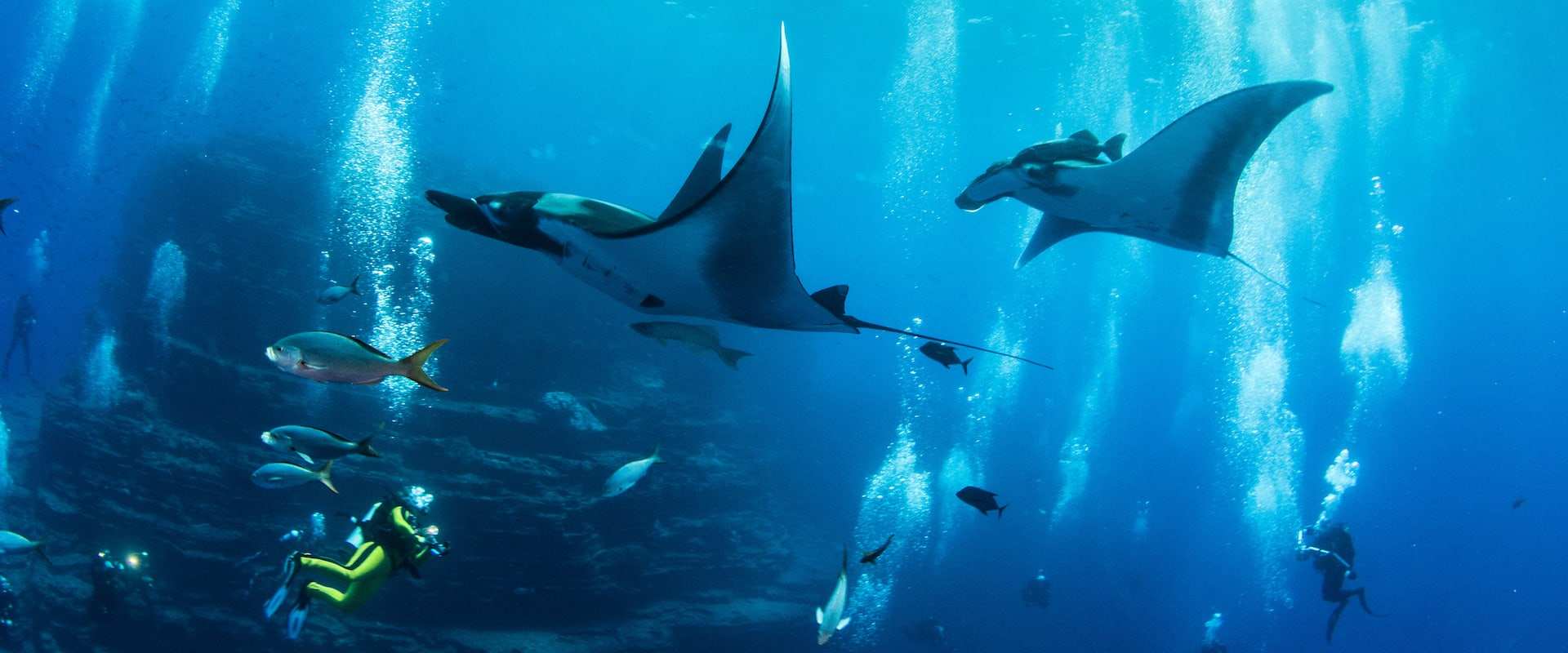
Liveaboard diving in Manta Alley is of course, for the mantas. Visitors won’t be disappointed either, it is possible to see even double digits of mantas in a single dive. The younger ones can be seen playing sometimes in shallower water, if you are lucky you might see them dancing around each other. There are other rays on show as well with black ribbontails sitting on the bottom. These round rays can be quite large sometimes reaching just under 2 meters’ width. Their black spotted back make harder to spot on the dark sand but they are very beautiful so keep an eye out.

For those who can drag themselves away from the mantas and other rays, there is a lot of other wildlife on offer at Manta Alley. There are numerous reef sharks, white and black tips both patrol this reef looking for food. The reef itself is beautiful as well, full of colourful hard and soft coral full of critters for macro photographers to enjoy. Over the corals you can also spot trevallies and huge barracuda hanging above or over the side of the reef.

Getting To Manta Alley

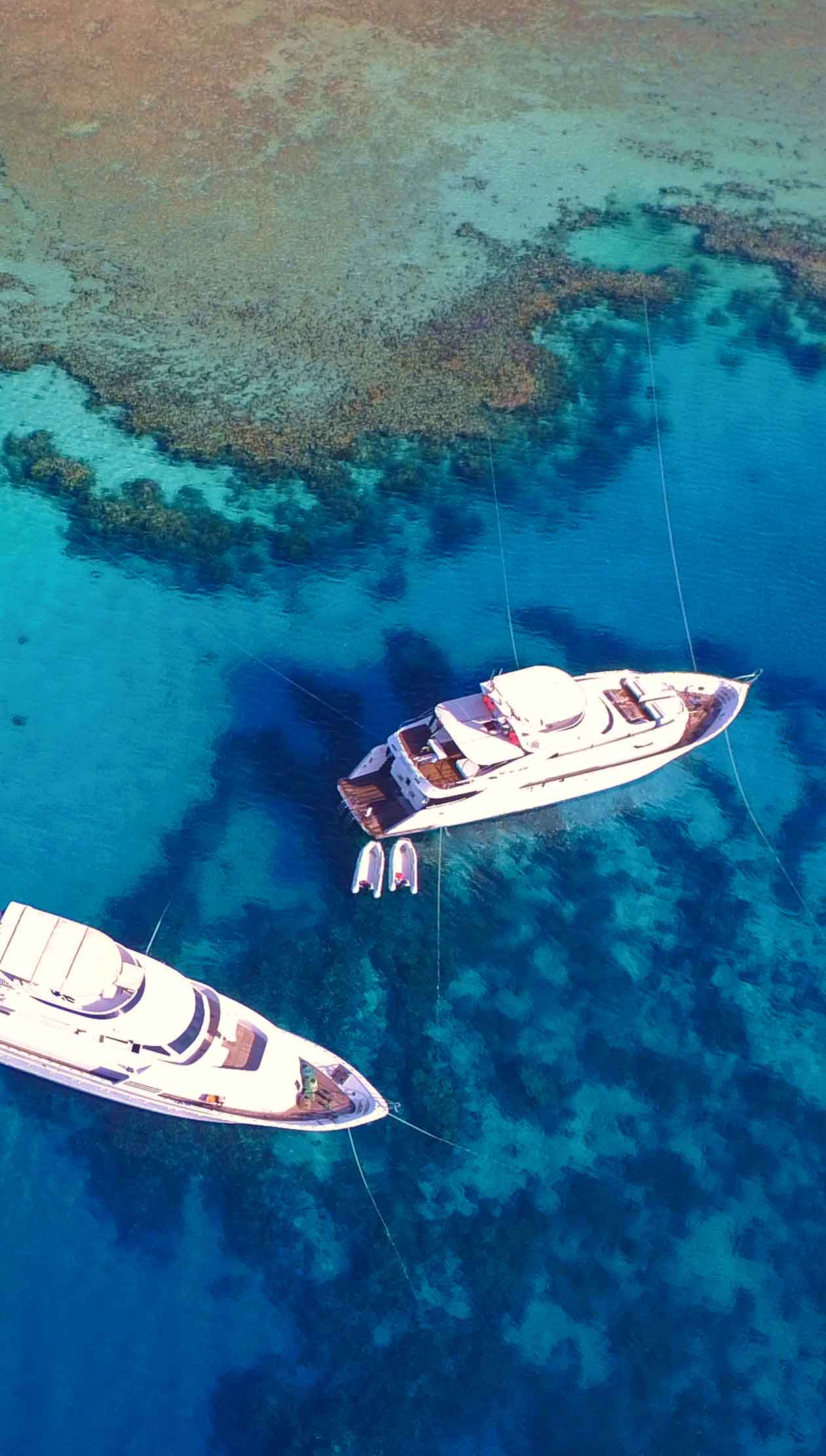
Manta alley is in a prime location, right in the middle of the Komodo National Park on the coast of Komodo Island. The site is very popular for liveaboard diving tours, not only because of the mantas but also the beautiful reef and opportunities for photography. The best way to visit Manta Alley is by choosing a Komodo liveaboard and there is plenty of choice on offer.

There are Indonesian liveaboards to suit all tastes and budgets in Indonesia. Motor vessels that have been customised for dive tours offer a fantastic experience with all the amenities on board.  By far the most popular vessels for Indonesian liveaboard diving are traditional Indonesian sailing ships. Dive cruises aboard these ships are incredibly relaxing and peaceful with luxurious cabins and traditional meals.

Most dive liveaboards depart either from Labuan Bajo on Flores or from Bali, some start at one and finish in the other. Getting to Bali is quite easy with the international airport offering flight from numerous ports of departure worldwide. Bali airport also offers connecting flights on to Labuan Bajo on Flores. There is also a three-day ferry ride between Bali and Labuan Bajo if you are feeling brave!


Manta Alley Diving Reviews

  • Rating 9.5 out of 10
  • 9.5 Exceptional
  • Rating 10.0 out of 10
  • 10.0 Exceptional
  • Louis Charles R
  • Flag of United StatesUnited States

Komodo was unexpectedly great. I wasn’t sure I was going to enjoy it. Plenty of variety for every type of diver.

Diving Manta Alley in July on the Adelaar
  • Rating 10.0 out of 10
  • 10.0 Exceptional
  • Edanili L
  • Flag of United StatesUnited States

Phenomenal. Was grateful that the cruise director Surya was attuned to my need for more thermal protection.

Diving Manta Alley in June on the La Galigo
  • Rating 8.0 out of 10
  • 8.0 Very good
  • Pablo A
  • Flag of United StatesUnited States

The best two dives With many mantas and big currents

Diving Manta Alley in July on the Mermaid I
  • Rating 9.2 out of 10
  • 9.2 Superb
  • Nancy W
  • Flag of United StatesUnited States

Mantas, mantas everywhere!! Unfortunatey the water was murky and cold but that's what brings the mantas...

Diving Manta Alley in June on the Blue Manta


What to know about diving in Manta Alley

What is Manta Alley in Komodo?

Manta Alley is a dive site in southern Komodo National Park known as a reliable manta ray cleaning station, where the rays circle over cleaning stations to have parasites removed by small fish. Conditions here tend to be cooler and can involve stronger currents than at the park's northern dive sites.

Which part of Komodo National Park is Manta Alley in?

It sits in the southern section of Komodo National Park, an area generally known for cooler, current-driven water compared to the park's northern sites. That southern position is part of what makes it such a reliable manta cleaning station. It's typically reached as part of a longer southern Komodo itinerary rather than a quick add-on stop.

How deep is Manta Alley?

The cleaning station sits at a depth manageable for most certified divers, with the surrounding reef offering both shallower and slightly deeper sections depending on where the mantas are congregating that day. Divemasters typically adjust depth based on manta activity rather than diving to a fixed profile. Much of the interaction occurs at comfortable, moderate depths rather than in deep water.

How strong are the currents at Manta Alley?

Southern Komodo National Park is known for stronger, cooler currents than the park's north, and Manta Alley is no exception; the flow is actually part of what draws mantas in to feed and get cleaned. Divers should be comfortable with some current and be prepared to hold position without disturbing the cleaning stations. It's generally considered a site for divers with at least some current experience.

What marine life will you see at Manta Alley besides mantas?

While reef mantas are the headline attraction at the cleaning station, the surrounding reef also supports healthy fish life and occasional reef sharks typical of southern Komodo's current-fed waters. Macro life shelters in the reef structure for those looking beyond the main event. Encounters can vary day-to-day depending on manta activity.

What's the best time to dive Manta Alley?

The dry season, roughly April through October, tends to bring calmer seas for the boat journey into southern Komodo National Park and generally reliable manta activity at the cleaning station. Mid-morning dives often align with active cleaning behavior, though exact timing can vary. Liveaboard schedules typically build in flexibility to maximize the chance of a good encounter.

How does Manta Alley compare to Manta Point near Nusa Penida?

Manta Alley sits within Komodo National Park's cooler, current-driven southern waters, while the Manta Point most divers mean near Bali is off Nusa Penida, a separate manta cleaning station entirely. Both function similarly as reliable cleaning stations, but the surrounding dive conditions, water temperature, and typical itinerary differ significantly. Divers touring Komodo won't typically also visit the Nusa Penida site on the same trip.

How do divers get to Manta Alley?

Because of its location in southern Komodo National Park, Manta Alley is reached almost exclusively by multi-day liveaboards rather than by a quick day trip from Labuan Bajo, given the longer transit time. Some day-boat operators do run it on longer full-day itineraries when conditions allow. Either way, arrival is strictly by boat.

What's visibility like at Manta Alley?

Visibility can be more variable than at some of Komodo's northern sites, partly due to the cooler, nutrient-rich water that also attracts the mantas in the first place. It's usually sufficient for solid encounters even when not at its clearest. Conditions tend to improve somewhat during the dry season.

Is Manta Alley good for underwater photography?

It's a wide-angle photographer's site above all, given the size of the mantas and the open water they're often seen in at the cleaning station. Getting a clean shot requires patience and good buoyancy to avoid disturbing the animals or kicking up sediment near the cleaning site. Natural light usually works well given the site's moderate depth.

Can you snorkel with mantas at Manta Alley?

Snorkeling is possible when mantas are feeding or cleaning closer to the surface, though the site is more consistently productive for scuba divers, who can position themselves near the cleaning station. Conditions and manta behavior on a given day determine how good a snorkel encounter will be. Most visitors experience it first as a dive site and second as a snorkeling option.

What's the water temperature like at Manta Alley?

Southern Komodo National Park runs cooler than much of the rest of Indonesia thanks to seasonal upwellings, so temperatures at Manta Alley can dip noticeably below the archipelago's typical 79–86°F (26–30°C) range. A thicker wetsuit, or a hood for longer dives, is worth considering. That cooler, nutrient-rich water is actually part of what draws the mantas.

Why is Manta Alley such a popular stop on Komodo itineraries?

A near-guaranteed manta encounter is a rare thing in diving, and Manta Alley's reliable cleaning station gives operators a dependable highlight to build a southern Komodo itinerary around. Its remote position also means fewer boats and calmer crowds than some of the park's more accessible sites. That combination of reliability and remoteness keeps it high on most Komodo wish lists.

What safety considerations apply when diving Manta Alley?

Good buoyancy control is essential to avoid drifting into the cleaning station or touching the mantas, both to protect the animals and to avoid startling them away from the site. Currents can also build unexpectedly given the site's southern Komodo location, so staying close to the group and watching air consumption is important. A surface marker buoy is standard practice given the potential for current.

What should first-time visitors know before diving Manta Alley?

Manage expectations around encounter length and manta behavior, since sightings depend on natural cleaning activity rather than a guaranteed schedule, though the site's reputation for reliability is well-earned. Cooler water than much of Indonesia means extra thermal protection is worth packing. Patience and good buoyancy go a long way toward a memorable encounter here.

We’re here to help, 24/7.

Connect with our expert travel consultants to plan your next trip.

  • Josue Zarco
  • Nicole Laughlin
  • Nina Kapp
  • Oksana Kovaleva
  • Mylene Issartial
  • Andrea Martinez
  • Ester Canali