Liveaboard.com

Greece Cruises

Compare and book 17 adventure cruises with 264 verified reviews online.

  • 100% Best Price Guarantee

Adventure Cruises in Greece

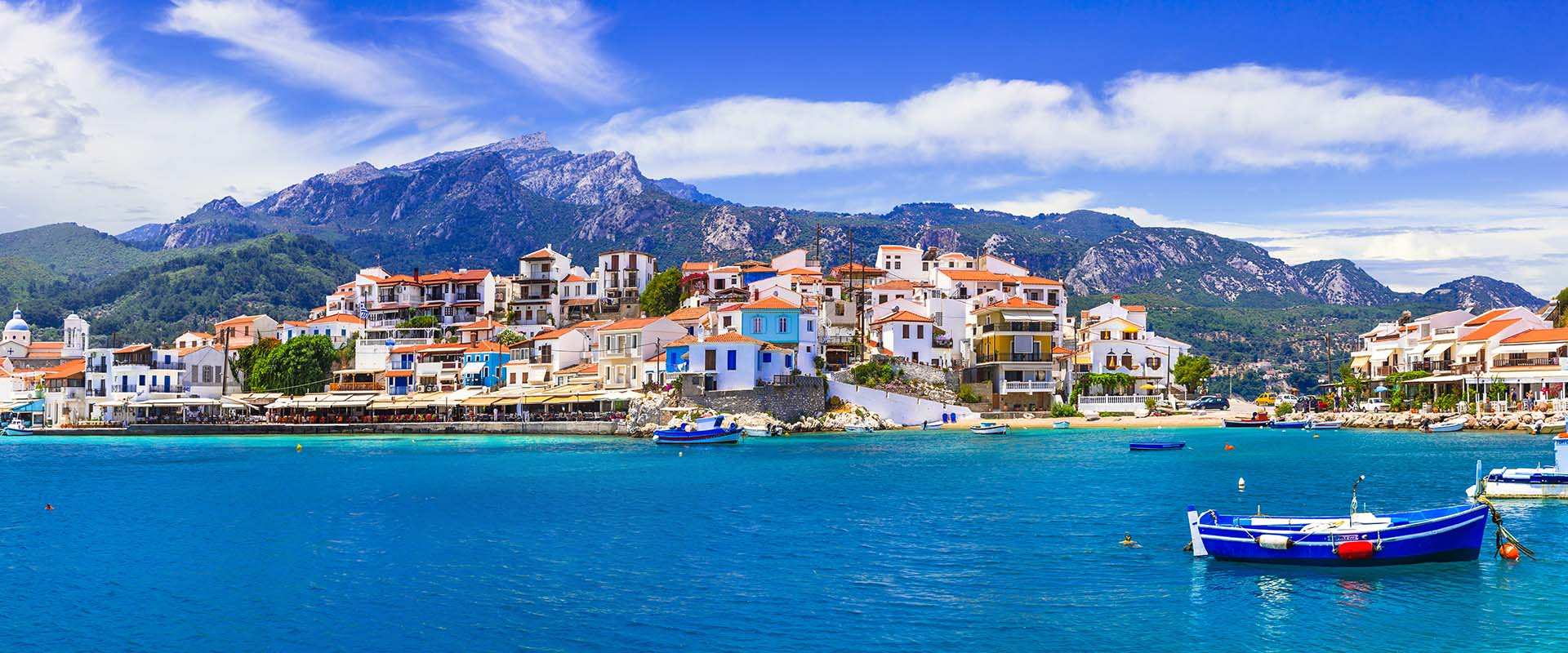
Warm weather, deep blue waters and the beauty of the Greek islands are at arm's reach in adventure cruises. An unforgettable experience.

Littered with tiny and beautiful islands, Greece small ship cruises offer you the opportunity to explore everything the Greek archipelagos have to offer from the comfort of a small ship cruise boat. Visiting the very best of Greece's glittering white sand beaches on one island then away to the lively nightlife hotspots on another is the best way to visit this beautiful part of the world in style. Greece caters to a variety of tastes and interests from fine dining and endless historical and cultural sites to shimmering blue waters, white beaches, and bustling nightlife.

Many adventure cruises around Greece begin in Athens, the capital, and an impressive cultural hub. Cruises then take in the Cyclades Islands, Ionian archipelago as well as the beautiful Dodecanese archipelago home to the iconic island of Rhodes. These island chains are each unique in culture, architecture, and cuisine, all enjoy the azure waters, sandy beaches, and laid-back atmosphere that is the postcard image of Greece. Whether you are hoping to see the wonders of Greek history, bronze yourself on the beach, or party until the morning visitors will find a host of wonders on a small ship cruise around Greece.


Best Greek island hopping cruises and areas to visit

Cyclades Islands

Home to some of Greece's most famous islands, the Cyclades has always been a hotspot for discerning travelers, and it remains the classic Greek island hopping route. From the all-night parties of Mykonos to romantic sunsets over the Caldera of Santorini, the Cyclades has a reputation as a magical place. The larger islands are home to rows of beautiful tavernas, panoramic restaurants, and wine cellars for fine dining enthusiasts. Sun worshippers will find a beach for every taste in a place where a cloud is so rare that it almost seems like a curiosity. Because the islands sit so close together, Cyclades island hopping by small ship lets you wake up somewhere new each morning without a single ferry queue. A small ship cruise allows you to make the most of hundreds of stunning swimming spots in the Cyclades with beautiful blue holes, caves, and hidden beaches. Santorini's caldera cliffs and volcanic beaches, the windmills and Little Venice quarter on Mykonos, and the Portara on Naxos are the set pieces most itineraries are built around.

Ionian Islands

Rich in history and blessed with a dramatic coastline, the Ionian Islands are renowned for their natural beauty and offer some of the greenest island hopping in Greece. The islands are geologically fascinating, with huge white cliffs along the coast and white sandy beaches nestled in between them. They are hard to access from land, but drop off a small ship cruise and explore some of the quietest and most beautiful spots. Paxos, in particular, has a huge number of tiny coves, inlets, and beaches tucked away; the largest island, Kefalonia, has a number of caves, including the underground lake at Melissani, along with Myrtos Beach and the cliffside village of Assos. Corfu, the second-largest island, is heaven for those looking for nightlife and fine dining, and its Venetian Old Town, Achilleion Palace, and the beaches at Paleokastritsa fill an easy day ashore. Further south, Zakynthos guards the Blue Caves and the shipwreck at Navagio. Short crossings between Corfu, Paxos, Lefkada, and Kefalonia make an Ionian island hopping cruise one of the gentlest ways to see this archipelago.

Dodecanese Islands

Home to the iconic and well-loved island of Rhodes, a small ship cruise in the Dodecanese Islands is not only the chance to explore some of the best beaches in Greece but a host of significant historical and archaeological sites. Rhodes alone offers a walled medieval Old Town, the acropolis above Lindos, and the Valley of the Butterflies, and the island is famed for its unique local delicacies, especially its wide range of delicious desserts and cookies. Kos is also a popular island for small ship cruises thanks to its vibrant nightlife and abundant beaches, and it is a wonderful mix of experiences, with bars and sunbeds often found just next to the ancient healing centre at the Asklepion or the plane tree said to have shaded Hippocrates. Quieter Patmos, with its Cave of the Apocalypse and hilltop Monastery of St John the Theologian, is the pilgrimage stop on most Dodecanese island hopping itineraries.

Best time to cruise in Greece

The best time for Greek island hopping depends on which of its treasures you want to experience and how you like your sun. The summer is the high season, running from June to September; this is the time when not only visitors from abroad flock to the islands but locals from the mainland, too. This is a vibrant and lively time to visit the islands when a rich variety of people are living the high life on the Greek archipelagos, so be prepared to share these islands with the rich and famous, and share the waters with their superyachts too. It can be pretty hot during the summer, and it is perfect for heading to the beach and making gloriously cool swim stops along the coast. Island hopping cruises in spring and autumn are cooler and quieter, and this is a great time for those looking to take in the sights and appreciate the history and architecture of Greece. It is worth noting that during the winter months, fewer local businesses will open, as many are closed during the low season, and island hopping departures are limited.

How to get to Greece

Most small ship cruises around Greece depart from Athens, which is the main international hub of Greece and the usual starting point for island hopping itineraries. Athens International Airport provides flights from around the world with good connections by metro to Piraeus port, where most small ship cruises depart from. Some cruises start on the archipelagos, which usually means traveling from Athens by flight or ferry out to the island chains. Some of the larger islands, such as Santorini, Mykonos, Rhodes, and Zakynthos, have their own international airports. Many of the smaller ones have domestic airports, making it a short hop over from Athens or one of the larger islands.

Best Greece cruises and areas to visit

Greece counts more than 6,000 islands and islets, only a couple of hundred of them inhabited, and they sit close enough together that a morning crossing can separate a medieval harbour from an afternoon at anchor beneath whitewashed cliffs. That density is what makes a cruise in Greece so rewarding: short sailing distances, four distinct archipelagos, and a genuinely different character in each one. Small ship cruises in Greece work the way island hopping was always meant to, moving at the pace of the sea rather than a ferry timetable.

Cyclades Islands

Home to some of Greece's most famous islands, the Cyclades has always been a hotspot for discerning travelers, and it remains the classic Greece cruise route. From the all-night parties of Mykonos to romantic sunsets over the Caldera of Santorini, the Cyclades has a reputation as a magical place, though the whitewashed villages and blue-domed churches sit on top of a much older story of ancient trade routes and sacred landscapes shaped by wind and water. The larger islands are home to rows of beautiful tavernas, panoramic restaurants, and wine cellars for fine dining enthusiasts. Sun worshippers will find a beach for every taste in a place where a cloud is so rare that it almost seems like a curiosity. Because the islands sit so close together, island hopping by small ship lets you wake up somewhere new each morning without a single ferry queue, and lets you stay in port after the day visitors have gone. A small ship cruise allows you to make the most of hundreds of stunning swimming spots in the Cyclades with beautiful blue holes, caves, and hidden beaches. Santorini's caldera cliffs and volcanic beaches, the windmills and Little Venice quarter on Mykonos, and the Portara on Naxos are the set pieces most itineraries are built around, though Mykonos in particular repays an early start: beyond the harbour lie quiet chapels, working farms, and coastal footpaths that belong to the island's much older life as an Aegean trading hub.

Ionian Islands

Rich in history and blessed with a dramatic coastline, the Ionian Islands are renowned for their natural beauty and make for one of the greenest cruises in Greece. Facing the Adriatic rather than the Aegean, these islands were shaped by Venetian rather than classical influence, and the olive groves, forested hills, arcaded streets, and local music give the region a character closer to Italy than to the rest of Greece. The islands are also geologically fascinating, with huge white cliffs along the coast and white sandy beaches nestled in between them. They are hard to access from land, but drop off a small ship cruise and explore some of the quietest and most beautiful spots. Paxos, in particular, has a huge number of tiny coves, inlets, and beaches tucked away; the largest island, Kefalonia, has a number of caves, including the underground lake at Melissani, along with Myrtos Beach and the cliffside village of Assos. Corfu, the second-largest island, is heaven for those looking for nightlife and fine dining, and its Venetian old town, hilltop fortresses, Achilleion Palace, and the beaches at Paleokastritsa fill an easy day ashore; arriving by sea mirrors the approach traders made here for generations. Further south, Zakynthos guards the Blue Caves and the shipwreck at Navagio. Short crossings between Corfu, Paxos, Lefkada, and Kefalonia make this the gentlest island hopping route in the country.

Dodecanese Islands

Stretching along the eastern edge of the Aegean, the Dodecanese Islands reveal a Greece shaped by centuries of exchange with Asia Minor, the Crusader states, and the Ottoman world, and the architecture, spices, and traditions here feel noticeably different from the central Aegean. A small ship cruise in the Dodecanese is not only the chance to explore some of the best beaches in Greece but a host of significant historical and archaeological sites. Rhodes stands at the crossroads of the ancient and medieval worlds, with classical temples, Byzantine churches, and Crusader walls coexisting inside one of the best-preserved historic towns in the Mediterranean, alongside the acropolis above Lindos and the Valley of the Butterflies. The island is also famed for its unique local delicacies, especially its wide range of delicious desserts and cookies. Kos is a popular island for cruises in Greece thanks to its vibrant nightlife and abundant beaches, and it is a wonderful mix of experiences, with bars and sunbeds often found just next to the ancient healing centre at the Asklepion or the plane tree said to have shaded Hippocrates. Quieter Patmos, with its Cave of the Apocalypse and hilltop Monastery of St John the Theologian, is the pilgrimage stop on most Dodecanese itineraries, while Symi's ochre neoclassical harbour is among the most striking arrivals in Greece.

Saronic Islands

Closest to Athens, the Saronic Islands have been Greece's maritime front porch since antiquity, and their proximity to the mainland makes them the gentlest introduction to cruising in Greece. Crossings are short and the seas are calm, so small ships can linger longer ashore among ancient sanctuaries, neoclassical ports, and island communities that still revolve around fishing and seafaring. Aegina, Poros, and Hydra are the usual calls, and the appeal is human scale rather than headline sights: archaeological sites, monasteries, and family-run tavernas that are part of daily life rather than staged attractions. Saronic cruises are also the easiest to combine with a few days in Athens, since most begin and end at Piraeus.

Planning your Greece cruise

Choosing your route

A Greece cruise almost always concentrates on a single archipelago rather than trying to cover the country, and that choice shapes the whole trip. The Saronic Islands suit short breaks and first-time cruisers, with the shortest crossings and the easiest link to Athens. The Cyclades suit travellers who want the postcard version of Greece and the highest concentration of swim stops. The Ionian is greener and more Venetian, better suited to those who want forested hillsides, sea caves, and long lunches over nightlife. The Dodecanese trades some of that scenery for depth of history, with medieval fortresses and monasteries sitting a few hours' sail apart. Crete, effectively a world of its own, tends to appear as a start or end point rather than a stop, and rewards anyone willing to add a few days on land for Knossos, the Samaria Gorge, or the beaches at Balos and Elafonisi.

Small ship cruises versus independent island hopping

Independent island hopping in Greece by ferry is perfectly possible, and plenty of people do it well, but it costs you time. You build the route around timetables, repack every two or three days, and reach only the ports the ferries serve. A small ship cruise carries your cabin with you, moves between islands overnight or over lunch, and anchors in bays, islets, and fishing harbours that no scheduled service calls at. Sailing with a few dozen passengers rather than a few thousand also changes what a day ashore looks like: you arrive before the tenders from the large ships, eat where the crew eats, and leave when you are ready rather than when the horn sounds. If your priority is swimming, scenery, and covering ground, a cruise wins comfortably. If you would rather settle into one town for a week, ferries make more sense.

How long an itinerary you need

Seven or eight days is the standard length for a Greece cruise, taking in roughly four to seven islands with a swim stop or two on the days between. Cyclades routes cover the most ground because the crossings are short, while Ionian and Dodecanese itineraries tend to linger longer in each port. Shorter three- and four-day cruises from Athens through the Saronic Gulf work well if you are pairing the trip with time on the mainland, and longer voyages of ten days or more start to reach the smaller, less-visited islands that rarely make a week-long schedule.

Best time to cruise in Greece

The best time to cruise in Greece depends on which of its treasures you want to experience and how you like your sun. Spring, from April to May, brings mild temperatures, green hillsides, and wildflowers across the islands. Seas are generally calm, ports are uncrowded, and archaeological sites can be explored without the intensity of summer heat. Greek Easter, particularly on Corfu, is one of the few moments when visitors see local religious tradition, music, and food at full strength rather than in summarised form.

Summer is the high season, running from June to September; this is the time when not only visitors from abroad flock to the islands but locals from the mainland, too. This is a vibrant and lively time to visit the islands when a rich variety of people are living the high life on the Greek archipelagos, so be prepared to share these islands with the rich and famous, and share the waters with their superyachts too. It can be pretty hot during the summer, and it is perfect for heading to the beach and making gloriously cool swim stops along the coast. July and August also bring the meltemi, the dry northerly wind that cools the Cyclades and occasionally reshuffles an itinerary; small ships handle this by anchoring outside busy ports or shifting to a quieter island for the day.

Autumn, from September into October, is widely considered the sweet spot for small ship cruising in Greece. The sea holds its summer warmth, the crowds thin dramatically, and the harvest brings wine festivals, fresh figs, and olive oil tastings to islands that were standing-room-only a month earlier. Sailing conditions are stable and the light turns golden over villages and ruins alike. Between them, spring and autumn offer the most rewarding balance of comfort, access, and atmosphere for anyone after a quieter trip. It is worth noting that during the winter months, fewer local businesses will open, as many are closed during the low season, and departures are limited.

How to get to Greece

Most small ship cruises around Greece depart from Athens, which is the main international hub of the country. Athens International Airport provides flights from around the world with good connections by metro to Piraeus port, where most Greece cruises depart from, and from there the classic routes fan out across the Aegean and Ionian seas. Some cruises start on the archipelagos, which usually means traveling from Athens by flight or ferry out to the island chains. Some of the larger islands, such as Santorini, Mykonos, Rhodes, and Zakynthos, have their own international airports. Many of the smaller ones have domestic airports, making it a short hop over from Athens or one of the larger islands.

What you will see and do on a Greece cruise

Layered history, casually placed

Archaeological sites appear almost offhandedly across the archipelago: Doric temples overlooking the sea, theatres carved into hillsides, sanctuaries dedicated to gods whose myths still run through local folklore. UNESCO-listed landmarks sit alongside ordinary life, with cafes beside ruins and fishermen mending nets beneath Byzantine walls. Byzantine chapels and monasteries add a quieter, more spiritual layer, their frescoes lit by candle rather than floodlight, while Venetian fortresses in the Ionian, Crusader castles in the Dodecanese, and neoclassical mansions in the island capitals record centuries of maritime power and trade. Shore excursions on a small ship cruise are usually guided walks with a historian, archaeologist, or local expert rather than coach tours, which is the difference between seeing a site and understanding where it sits in the sweep of Greek history.

Adventure on the water and along the coast

Between landings, the sea becomes the destination, and this is where a Greece adventure cruise separates itself from a conventional holiday. Ships anchor in sheltered bays for swimming and snorkelling in clear, mineral-rich water, and kayaks and paddleboards give quiet access to sea caves and rocky inlets that larger boats cannot reach. Coastal hikes, gorge walks, and hilltop village trails add an active dimension ashore for those who want it. The coastline shifts constantly as you sail: limestone cliffs plunging straight into the water in the Ionian, pine forests reaching down to pebble beaches, and the stark volcanic landscapes of the southern Cyclades. Dolphins are a regular sight on longer crossings, and seabirds trace migration routes overhead. Even the scrub earns its place, thick with thyme, oregano, sage, and wild fennel that scent the air and end up in the evening's cooking.

Food, markets, and island cuisine

Food changes with the route. Cycladic fava and sun-dried tomatoes, Ionian olive oils and seafood, and Dodecanese spices carried over centuries of trade with Asia Minor all reflect the islands you are sailing through, and most small ships build their menus around what they can buy locally that week. Market visits introduce regional cheeses, herbs, and produce; olive mill stops and wine tastings connect those flavours to the ground they came from; and informal dinners ashore at family-run tavernas do the rest. This kind of access is far harder to arrange when you are moving yourself between islands on a ferry schedule.

Greece Cruise Tips

  • Small ship cruises of Greece are extremely popular thanks to the calm waters and rich experiences on offer. It is advisable to book early if you would like to visit in the summer as many boats are booked up months or more in advance.
  • For those who are travelling to the islands by ferry or domestic flight, it is worth noting that they are subject to delays, especially in the peak months. It is best to arrive a day or two before departure and enjoy a little more of Greece at the same time. The ferries and inter-island flights are also extremely busy and it is worth booking well in advance.
  • Check the itinerary for your Greece cruise, as different routes offer different activities. Sun worshippers should look out for beach tours and plenty of swim stops. Those after a more active adventure should check for kayaking, paddleboarding, and hiking, while anyone looking to experience the history and culture of Greece will find islands such as Rhodes and Kos have the widest variety of sites.
  • Greece is extremely hot and sunny, which is good news for a summer cruise. The sun is strong in both the summer and the cooler months, making suncream and good coverage of hats and clothing a must. Mosquitos are less of a problem on the islands than on the mainland, but it is still worth bringing a repellent to avoid any bites.
  • The water in Greece is often so clear that your boat can look as though it is floating on air, so it should come as no surprise that snorkelling is a big hit here. Beautiful geological formations, bubbling volcanic seabeds, and shoals of fish make it worth bringing your own mask and fins if you enjoy snorkelling and swimming.
  • Greece is part of the E.U. and uses Euros as its currency. Banks are easily found on the islands and cards are widely accepted. Tipping is customary for good service. It is interesting to note that due to local regulations your bill for food or drinks must always be left displayed on your table as proof that you have been legally charged.

A cruise in Greece is less a journey between destinations than a passage through time, culture, and elemental beauty, and small ship cruising restores the old logic of the Aegean and Ionian seas, where islands were meant to be approached slowly and understood in relation to one another. Explore all the Greek archipelagos have to offer, from the Saronic Islands on Athens' doorstep to the Cyclades, the Ionian, and the beautiful Dodecanese. Whether you want the wonders of Greek history, an active adventure on the water, or a different beach every afternoon, you'll find a host of wonders in Greece.

Choosing your Greek island hopping route

Island hopping cruises in Greece almost always concentrate on a single archipelago rather than trying to cover the country, and that choice shapes the whole trip. The Cyclades suit travellers who want the postcard version of Greece and the highest concentration of swim stops, since the islands sit close enough together that crossings rarely eat into a day. The Ionian is greener and more Venetian, better suited to those who want forested hillsides, sea caves, and long lunches over nightlife. The Dodecanese trades some of that scenery for depth of history, with medieval towns and monasteries sitting a few hours' sail apart. Crete, effectively a world of its own, tends to appear as a start or end point rather than a stop, and rewards anyone willing to add a few days on land for Knossos, the Samaria Gorge, or the beaches at Balos and Elafonisi.

Small ship cruising versus independent island hopping

Independent island hopping in Greece by ferry is perfectly possible, and plenty of people do it well, but it costs you time. You build the route around timetables, repack every two or three days, and reach only the ports the ferries serve. A small ship carries your cabin with you, moves between islands overnight or over lunch, and anchors in bays, islets, and fishing harbours that no scheduled service calls at. Sailing with a few dozen passengers rather than a few thousand also changes what a day ashore looks like: you arrive before the tenders from the large ships, eat where the crew eats, and leave when you are ready rather than when the horn sounds. If your priority is swimming, scenery, and covering ground, a cruise wins comfortably. If you would rather settle into one town for a week, ferries make more sense.

How long an itinerary you need

Seven or eight days is the standard length for a Greek island hopping cruise, taking in roughly four to seven islands with a swim stop or two on the days between. Cyclades routes cover the most ground because the crossings are short, while Ionian and Dodecanese itineraries tend to linger longer in each port. Shorter three- and four-day cruises from Athens work well if you are pairing the trip with time on the mainland, and longer voyages of ten days or more start to reach the smaller, less-visited islands that rarely make a week-long schedule.

Food and culture ashore

Smaller ships often build their shore excursions around the local way of life rather than the headline sights. You might join a traditional Greek cooking class, visit an olive oil producer, or walk through a village where time seems to stand still, and those encounters with artisans, farmers, and fishermen are usually what people remember longest. Onboard, small ship galleys tend to source fresh, local ingredients and build menus around the region you are sailing through, so a week of grilled seafood, moussaka, and tzatziki changes character as the itinerary moves from one archipelago to the next.

Greece Cruise Tips

  • Small ship island hopping cruises of Greece are extremely popular thanks to the calm waters and rich experiences on offer. It is advisable to book early if you would like to visit in the summer as many boats are booked up months or more in advance.
  • For those who are travelling to the islands by ferry or domestic flight, it is worth noting that they are subject to delays, especially in the peak months. It is best to arrive a day or two before departure and enjoy a little more of Greece at the same time. The ferries and inter-island flights are also extremely busy and it is worth booking well in advance.
  • Check the itinerary for your small ship cruise, as different island hopping routes in Greece offer different activities. Sun worshippers should look out for beach tours and plenty of swim stops. Those looking to experience the history and culture of Greece will find some islands such as Rhodes and Kos to have the widest variety of sites.
  • Greece is extremely hot and sunny, which is good news for a summer island hopping cruise. The sun is strong in both the summer and the cooler months, making suncream and good coverage of hats and clothing a must. Mosquitos are less of a problem on the islands than on the mainland, but it is still worth bringing a repellent to avoid any bites.
  • The water in Greece is often so clear that your boat can look as though it is floating on air, so it should come as no surprise that snorkelling is a big hit here. Beautiful geological formations, bubbling volcanic seabeds, and shoals of fish make it worth bringing your own mask and fins if you enjoy snorkelling and swimming.
  • Greece is part of the E.U. and uses Euros as its currency. Banks are easily found on the islands and cards are widely accepted. Tipping is customary for good service. It is interesting to note that due to local regulations your bill for food or drinks must always be left displayed on your table as proof that you have been legally charged.

Explore all the Greek archipelagos have to offer on an island hopping cruise, including the Cyclades Islands, the Ionian, and the beautiful Dodecanese archipelago. Whether you want to see the wonders of Greek history, tan on the beach, or party until the morning, you'll find a host of wonders in Greece.


Greece Adventure cruise reviews

  • Rating 8.7 out of 10
  • 8.7 Fabulous
  • Rating 9.6 out of 10
  • 9.6 Exceptional
  • Diane P
  • Flag of United StatesUnited States

Cruise experience was great. A good mix of motoring to locations and sailing. Cabins were comfortable, food was good and the skipper was great.

Cruising Greece in June on the Bavaria 51
  • Rating 9.6 out of 10
  • 9.6 Exceptional
  • Jazelle J
  • Flag of United StatesUnited States

Amazing! Got to see so many island and visit places we never would have been able to without this trip. Greece overall is stunning and has so much to offer! Can’t wait to get to visit again eventually!

Cruising Greece in May on the Christianna VII
  • Rating 8.0 out of 10
  • 8.0 Very good
  • Paul B
  • Flag of United StatesUnited States

Patmos and Amorgos, and Melos were the better stops. Lipsi not so much, and Kalymnos should be done differently. Ikaria was just fine, just enough time.

Cruising Greece in May on the Panorama Greece
  • Rating 9.6 out of 10
  • 9.6 Exceptional
  • Salvador F
  • Flag of United StatesUnited States

The overall experience was outstanding. We loved the destinations because we went to places that the larger ships may not be able to go to.

Cruising Greece in April on the Elysium


What to know about adventure cruising in Greece

Are Greek island cruises worth it?

For most travelers, yes — especially on a small-ship cruise. A single voyage can take you to four or five islands — Santorini, Mykonos, Rhodes, Crete, and Corfu — without the hassle of booking ferries, hotels, and transfers between each stop. Small ships have the added advantage of accessing lesser-known ports and hidden anchorages that large cruise liners simply can't reach, giving you a more authentic experience of the Greek islands. The main trade-off is limited time in each port, but for first-time visitors to Greece, a cruise is widely considered the ideal introduction.

Where do Greece cruises leave from?

The most popular departure port is Piraeus (Athens), followed by Thessaloniki in northern Greece. Smaller embarkation ports — better suited to small-ship itineraries — include Heraklion (Crete), Corfu Town, and Rhodes Town, which serve as starting points for more regional, island-focused voyages. Some small-ship itineraries also depart from Turkish ports like Bodrum or Istanbul for Aegean crossings. For maximum time in the Greek islands, look for round-trip itineraries that start and end in Greece rather than repositioning across the broader Mediterranean.

Which cruises cover Italy, Greece, and Spain?

Multi-country Mediterranean itineraries that combine Italy, Greece, and Spain are widely available, typically lasting 10–14 nights. Small-ship voyages on this route tend to favor smaller, more atmospheric ports — think Dubrovnik, the Amalfi Coast, or the Aeolian Islands rather than major cruise hubs — and often include more overnight stays, giving you genuine evening time ashore. These itineraries typically run from May through October, and booking well in advance is recommended for the best availability.

What cruises go to Greece?

A wide range of cruise options sail to Greece as part of the Mediterranean season, from large resort ships to intimate small-ship voyages. Small-ship cruises are particularly well-suited to Greece, as they can dock directly in smaller island ports, anchor in secluded bays, and offer a more immersive, unhurried experience. Most itineraries call on the classic Aegean islands — Santorini, Mykonos, Rhodes, and Crete — while small-ship routes often venture further to the Dodecanese, Cyclades, or Ionian islands. The season typically runs from May through October.

Are there cruises from the U.S. to Greece?

Direct sailings from the U.S. to Greece are rare. The most practical option for most U.S. travelers is to fly into Athens and board from Piraeus, which also allows you to spend a day or two exploring the city before setting sail. Some small-ship operators offer one-way itineraries that begin or end at different Greek ports, making it easy to combine your cruise with independent travel before or after. Spring and early fall departures tend to offer the best value and more comfortable temperatures.

Is a Greek island cruise good for families?

Yes, particularly for families with children ages 6 and up. Small-ship cruises in Greece offer an especially engaging experience for curious kids — snorkeling in clear Aegean waters, exploring ancient ruins, and arriving in dramatic ports like the Santorini caldera by sea are the kinds of experiences that stay with children long after the trip. The smaller group sizes also mean more personalized attention and a less overwhelming environment than large resort ships. One thing to plan for: some ports involve steep climbs or tender boat transfers that can be tricky with strollers or very young children.


Similar destinations

Croatia

Croatia

  • Rating 9.1 out of 10
  • 45 cruise ships
  • 173 reviews
Italy

Italy

  • Rating 0.0 out of 10
  • 1 cruise ship
Turkey

Turkey

  • Rating 10.0 out of 10
  • 6 cruise ships
  • 1 review
Scotland

Scotland

  • Rating 0.0 out of 10
  • 5 cruise ships
Norway

Norway

  • Rating 0.0 out of 10
  • 3 cruise ships
Portugal

Portugal

  • Rating 0.0 out of 10
  • 1 cruise ship

We’re here to help, 24/7.

Connect with our expert travel consultants to plan your next trip.

  • Nicole Laughlin
  • Ester Canali
  • Mylene Issartial
  • Andrea Martinez
  • Farah Celada-Benito
  • Josue Zarco
  • Nina Kapp