Liveaboard.com

Hin Muang Liveaboard Diving

Our guests rated liveaboard diving in Hin Muang as 8.7

  • 100% Best Price Guarantee

Liveaboard Diving in Hin Muang

What To Expect On A Hin Muang Liveaboard

Another Thai liveaboard dive site favorite is Hin Muang. Only a few hundred meters west of Hin Daeng is Hin Muang (Purple Rock), an oasis in the expanse of the South Andaman Sea. As the name suggests, Hin Muang is covered in pink and purple corals. Somewhat oval and approximately 200 m long by 20 m wide, this site can be challenging in current as the rock acts to increase the current speed over its surface. Its topography is simple yet intricate, with numerous outcrops, ledges, and sandy patches providing shelter from the currents. There is also a channel in the middle of the reef where reef fish congregate to escape the currents, making for an interesting spectacle. Rich with marine life and flora, Hin Muang is an excellent dive site as part of your Thailand liveaboard itinerary.

Diving here is possible from November to April, and there are several 3 to 7-night dive itineraries from the best Thailand liveaboards visiting this region.

What You Can See

There is a permanent mooring line on the northwestern side, which can be used by your liveaboard vessel, where there is a split in the rock, which joins again around 20m. As you descend to this depth, commence your dive against the current along the wall (usually in the easterly direction) in and around the many small pinnacles that crop up a bit like mushrooms. Amongst these, schools of rainbow runners, barracuda, snappers, and groupers lurking around. Be aware of your dive profile at all times, as it is easy to go up and down across these without noticing the change in depth. The sandy bottom is beyond recreational dive limits at around 50m. There is another mooring line to the east descending to approximately 22m, although it is best to return to western life for your safety stop.

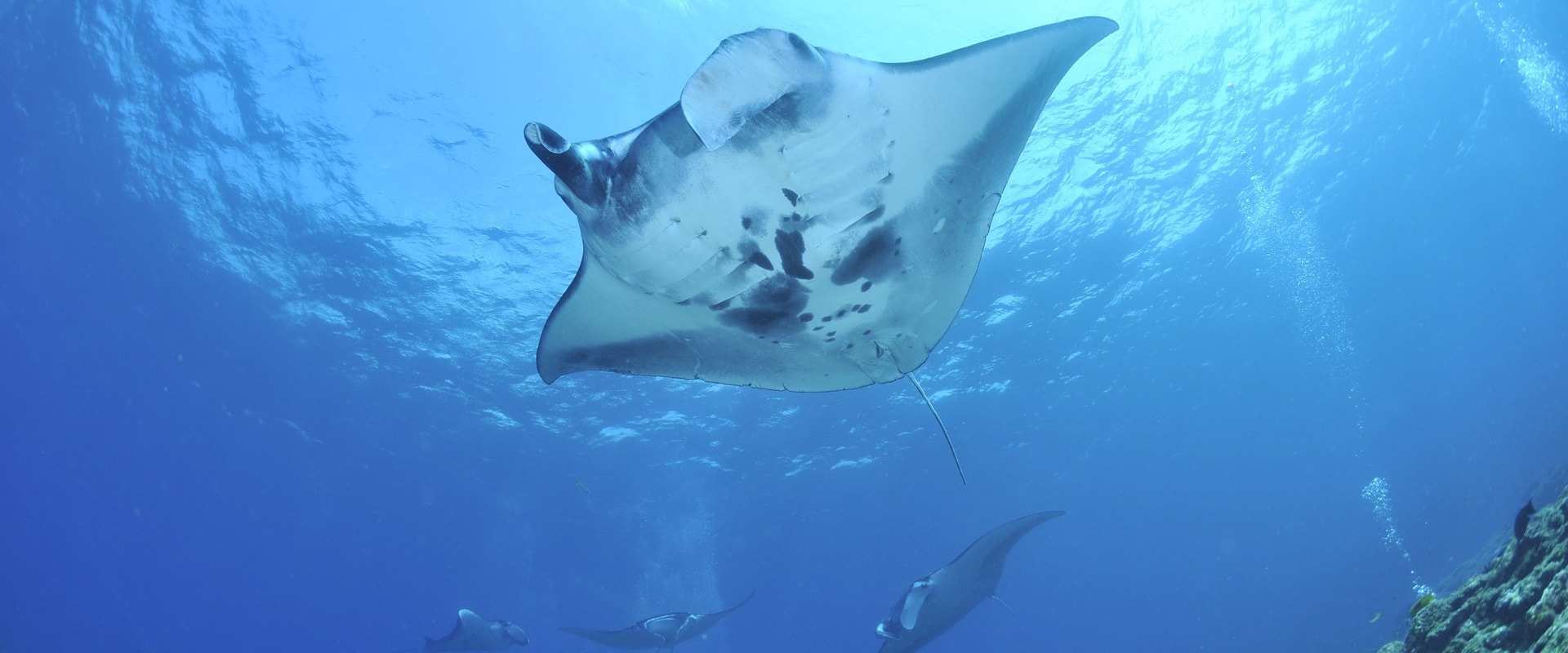
Along with the abundance of purple soft corals, the walls are adorned with a colorful display of sea fans. Masses of glassfish dart around amongst them and the rocky outcrops, trying to escape the hunting trevallies. At about 8m depth to the west of the mooring line, the shallows see what could be anemone city with the multitude of these harboring clownfish and cleaner shrimp. Leopard sharks and marble rays are seen lying on the sandy areas in and amongst the pinnacles or deeper on the sandy flats found at 50m, harder to notice from the recreational dive limit of 30m. Grey reef sharks may be seen by the dozens at times, patrolling the blue waters. Long Fin Batfish near the mooring line, look into the blue for schools of barracuda patrolling the seas. Like its sister island, Hin Daeng, Hin Muang attracts the larger pelagic like the Manta Rays and Whale Sharks, an important feeding station when the waters are plankton-rich between February and April. The peaks of the pinnacles act like cleaning stations for the Manta Rays, and if lucky enough to see one, find a small patch to hold onto and watch as these gentle giants hover effortlessly while being groomed by cleaner wrasse.

Other than the usual suspects, triggerfish, barracudas, snappers, groupers, trevally, giant moray, lionfish, puffer porcupines fish, and a lot of colorful fish like angelfish, Moorish idols, oriental sweetlips, boxfish, Hin Muang also promises a rich macro life. The avid photographer will relish the opportunity to look for ghost pipefish, nudibranchs, nose hawkfish hiding amongst the branches of the coral forest, and most preferably, the harlequin shrimp to the north of the rock at around 25m.

This is a dive destination not to be missed while diving in the South Andaman Sea.

Getting There

Liveaboard.com offers a great selection of Thailand liveaboard itineraries that cover the best of Thailand's west coast. The best way to get to Hin Muang is on a Thailand liveaboard trip from Phuket. Dive safaris typically depart from Chalong Pier in Phuket or Pak Bara Pier from Hat Yai airport, both of which can be reached by domestic flight from Bangkok.


Hin Muang Diving Reviews

  • Rating 8.7 out of 10
  • 8.7 Fabulous
  • Rating 10.0 out of 10
  • 10.0 Exceptional
  • Brian H
  • Flag of United StatesUnited States

Another great dive site - from shrimp to rare striped eel and lots of fan coral!

Diving Hin Muang in September on the Seatopia
  • Rating 9.6 out of 10
  • 9.6 Exceptional
  • Jeffrey L
  • Flag of United StatesUnited States

Fantastic - manageable currents and we spotted a few Mantas.

Diving Hin Muang in December on the The Phinisi
  • Rating 8.8 out of 10
  • 8.8 Fabulous
  • Pui Kwan H
  • Flag of Hong KongHong Kong

Very biodiverse of fish and reefs. Many schools of fish would surround you and good for pictures.

Diving Hin Muang in May on the Seatopia
  • Rating 8.0 out of 10
  • 8.0 Very good
  • Charlotte B
  • Flag of CanadaCanada

Decent soft coral cover. Nice reef. Heavy current limited exploring the entire reef

Diving Hin Muang in May on the Thailand Aggressor


What to know about diving in Hin Muang

What does "Hin Muang" mean?

"Hin Muang" means "purple rock" in Thai, named for the purple soft coral and anemones that carpet much of the pinnacle. It sits about 10 minutes by boat from its sister site, Hin Daeng.

How deep is Hin Muang?

Hin Muang's shallow side levels out around 5–66 ft (1.5–20 m), while its other face drops steeply — leveling briefly near 200 ft (60 m) and continuing well beyond recreational limits. Most dives here stay above 100 ft (30 m).

What sharks can you see at Hin Muang?

Grey reef sharks and leopard sharks are regularly spotted patrolling Hin Muang's deeper ledges, and whale sharks also pass through seasonally. It's considered one of the more reliable shark sites in this part of the Andaman Sea.

When is the best time to dive Hin Muang?

The season runs from November through April, with February through April offering the best odds of seeing manta rays and whale sharks, alongside the resident reef sharks. Rough monsoon seas close the site for the rest of the year.

Where is Hin Muang located?

Hin Muang sits in the Andaman Sea south of Koh Lanta, immediately next to Hin Daeng, and is reached the same way — by speedboat day trip from Koh Lanta or Phuket, or on a southern-extension liveaboard route from the Similan Islands.

How far is Hin Muang from Hin Daeng?

The two pinnacles sit only about 10 minutes apart by boat, close enough that nearly every trip dives both on the same day.

What soft coral grows at Hin Muang?

Dense purple soft coral and sea anemones blanket much of the pinnacle, especially on the shallower slopes, giving the site both its name and its reputation as one of the most photogenic dives in the region.

Can beginners dive Hin Muang?

It's best suited to divers with some experience given the depth range and occasional current, though the shallower side can work for less experienced divers under a guide's supervision. The deeper wall and its sharks are really an advanced diver's draw.

How do you get to Hin Muang from Phuket?

Speedboats from Phuket typically take around 2.5–3 hours each way, which is why most operators sell Hin Muang and Hin Daeng as a single long day trip or include them on a multi-day liveaboard covering the southern Andaman.

Are manta rays common at Hin Muang?

Manta rays are seen here seasonally, most often from February through April, though, as at any open-water site, sightings depend on plankton conditions and aren't guaranteed on any single dive.

What's the current like at Hin Muang?

Current can be noticeable along the pinnacle's exposed faces, particularly on the deeper wall where the big fish congregate, so guides often plan the dive as a drift along the current line rather than fighting it.

Is Hin Muang a pinnacle or a reef?

It's a submerged pinnacle rising from deep water rather than a fringing reef, which is exactly why it attracts pelagic fish that prefer structure in open water over a shallow coastal reef.

What other fish species gather at Hin Muang?

Big schools of barracuda, rainbow runners, and trevally are a near-constant feature along the current line, alongside scorpionfish and other reef life tucked into the soft coral on the shallower slopes.

Is Hin Muang included on Similan liveaboard routes?

Some longer Similan Islands liveaboard itineraries extend south to include Hin Daeng and Hin Muang, though it's more commonly dived as a dedicated day trip from Koh Lanta or Phuket rather than a standard stop on shorter Similan trips.

What's the visibility like at Hin Muang?

Visibility usually runs 50–100 ft (15–30 m) in season, at its best from February through April, though it can shift quickly with the same plankton blooms that draw in the site's sharks and rays.

We’re here to help, 24/7.

Connect with our expert travel consultants to plan your next trip.

  • Mylene Issartial
  • Andrea Martinez
  • Nicole Laughlin
  • Juliane Ball
  • Josue Zarco
  • Oksana Kovaleva
  • Ester Canali