Liveaboard.com

Shark and Yolanda Reefs Liveaboard Diving

Our customers rated liveaboard diving in Shark and Yolanda as 9.3.

  • 100% Best Price Guarantee

Liveaboard Diving in Shark and Yolanda

What To Expect on a Shark and Yolanda Reefs Liveaboard

Located in the Ras Mohammed National Park in the Northern Red Sea, Shark and Yolanda Reef is a well-recognised dive site visited by dive liveaboards offering dive cruises in this area. Two submerged mounds that come up to within 0.5 metres of the surface and drop to plateaued areas at 15-20 metres make up this incredible dive area. Around the undersea mounds, the depth can drop dramatically away to over 750 metres deep. Shark Reef and Yolanda Reef are actually two dive sites, but they are usually referred to as a single dive site or area, and often dived in one dive.

What You Can See

Shark Reef is one of the most famous dive sites in the area and can provide divers with amazing sights. With spectacular reef and fauna, the best time to enjoy this area is in the summer months (July) when hundreds of schooling barracuda, jackfish and batfish appear to give divers a show they won't forget. Currents can, however, be strong, so a guided dive of this site is strongly advised.

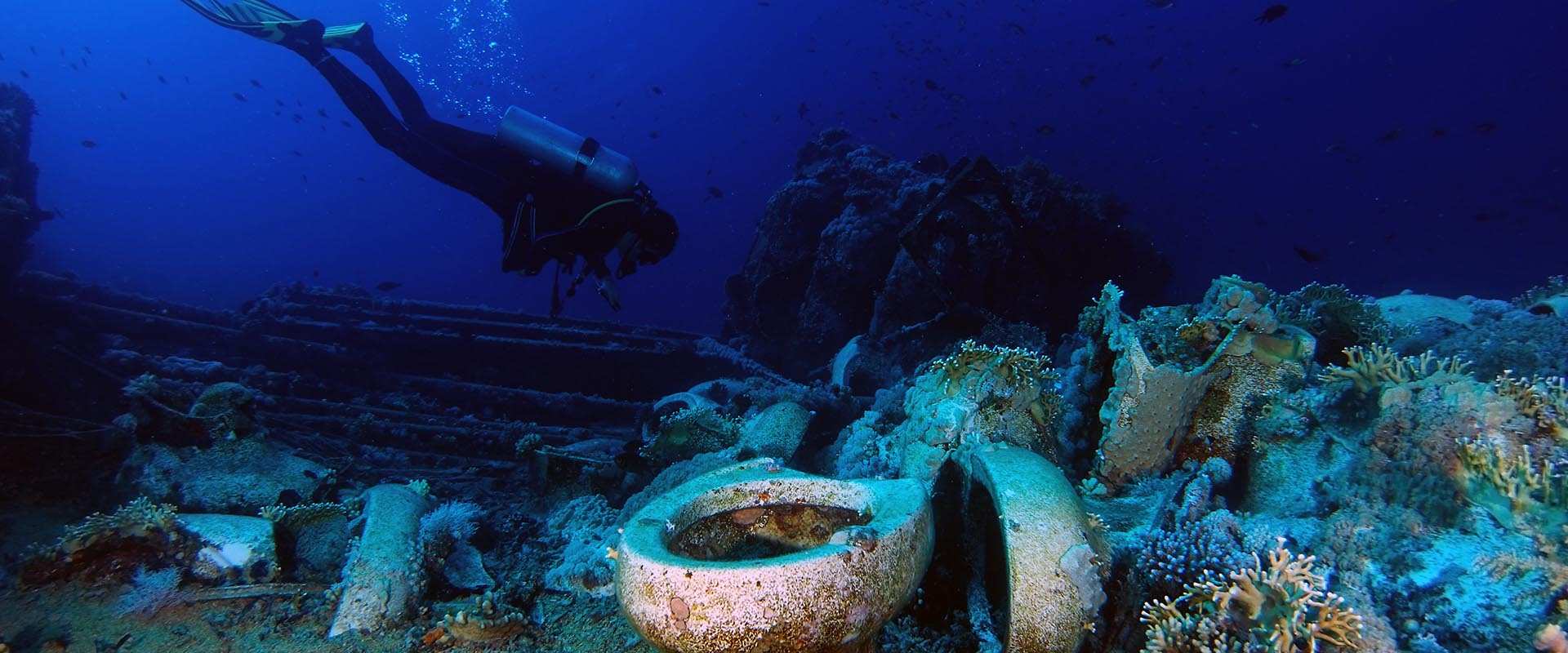
Yolanda Reef is situated right next door and offers an equally amazing dive area to explore. Given its name after a Cypriot merchant ship that sank in 1980, the Yolanda was a cargo vessel carrying mainly sanitary fixtures, bathtubs, toilets and even an old BMW. It makes for an interesting dive to see the remains of the ship, but also it's cargo scattered across the reef for divers to investigate. Marine life encounters range from Snappers, Emperor Fish, Napoleon Fish, Fusiliers to the camouflaged critters such as stonefish and crocodile fish.

Both sites can be dived and explored in one dive by following a specific route led by experienced dive guides. An amazing dive area full of life.

Getting To Shark And Yolanda Reefs

Easily accessed by Egypt liveaboards departing from Sharm El Sheikh in Northern Egypt, the nearest International airport is located directly in Sharm El Sheikh or domestic flights are available directly from Cairo.


Shark and Yolanda Reef liveaboard diving offers guests a stunning reef teeming with critters and surrounded by huge shoals of fish such as barracuda, jackfish and batfish. The wreck of the Yolanda has its cargo strewn all over the sea floor which includes bathtubs, toilets and even an old BMW.

Shark and Yolanda Diving Reviews

  • Rating 9.3 out of 10
  • 9.3 Superb
  • Rating 10.0 out of 10
  • 10.0 Exceptional
  • Cyr Geraurd O
  • Flag of United StatesUnited States

nice reef wall with a lot of fun marine life

Diving Shark and Yolanda in October on the Snefro Pearl
  • Rating 10.0 out of 10
  • 10.0 Exceptional
  • daniel D
  • Flag of United StatesUnited States

Excellent drift dive, beautiful

Diving Shark and Yolanda in August on the Snefro Pearl
  • Rating 10.0 out of 10
  • 10.0 Exceptional
  • Erik S
  • Flag of United StatesUnited States

Nice abundant sea life and corals

Diving Shark and Yolanda in March on the SS Serena Dreams
  • Rating 8.0 out of 10
  • 8.0 Very good
  • Thomas R
  • Flag of United StatesUnited States

Very good--water wasn't too cold even in late November.

Diving Shark and Yolanda in November on the Snefro Pearl


What to know about diving in Shark and Yolanda

What are Shark Reef and Yolanda Reef known for?

This paired site in Ras Mohammed National Park is routinely ranked among the world's best dives — a sheer wall at Shark Reef dropping into the abyss, connected by a saddle to Yolanda Reef, where the wreckage of a cargo ship's toilets and bathtubs still litters the slope. It's as famous for drama, with a near-vertical drop-off and big fish action, as for novelty, with divers posing next to a coral-encrusted bathtub.

How deep is the site and what's a typical dive profile?

Shark Reef's wall drops from the surface past 2,600 ft (800 m), though divers typically work the 60-100 ft (18-30 m) range along the face. The dive usually drifts across the saddle into Yolanda Reef's coral garden and plateaus at 33-66 ft (10-20 m), then finishes shallow over Yolanda's scattered cargo at 66-98 ft (20-30 m).

What's the current like — is it a drift dive?

Yes, and it's one of the defining features of the site — currents run consistently and can shift direction mid-dive, which guides use to their advantage to cover the wall and spot pelagics. Entries are typically quick, negative descents to avoid drifting off the site before reaching the reef.

What certification level or experience do you need?

The wall and drift sections call for Advanced Open Water or equivalent current experience, since conditions can turn strong with little warning. The connecting saddle area, known as Anemone City, is shallow and sheltered enough that newly certified divers can enjoy it comfortably.

What marine life will I likely see?

Grey reef sharks patrol the wall year-round, and large schools of snapper, barracuda, batfish, and sweetlips are a near-constant feature. Look for giant morays and blue-spotted stingrays around the Yolanda's cargo debris, a resident Napoleon wrasse, and, in the right season, hammerhead or oceanic whitetip sharks out in the blue.

When is the best time of year to dive Shark and Yolanda Reefs?

October through February is prime time for pelagics, with hammerhead sightings most reliable in November and December below about 98 ft (30 m). Divers chasing sheer volume of fish life instead favor July and August, when the wall and saddle turn into what regulars call "fish soup."

Is it accessible by day boat or liveaboard only?

Both — day boats run out of Sharm El Sheik for roughly $60-90 USD as of 2026, and it's a standard stop on Ras Mohammed liveaboard itineraries. The advantage of a liveaboard is timing: getting on site at dawn, ahead of the day-boat fleet, makes a real difference on a site this popular.

What's the water temperature like?

It runs from about 72°F (22°C) in winter up to roughly 84°F (29°C) in summer. Most divers wear a 3mm suit in summer and step up to 5mm from November through March.

Is this suitable for beginners, or advanced-only?

The headline dive along Shark Reef's wall is best left to advanced, current-comfortable divers, particularly given the open-water exposure and depth of the drop-off. That said, Anemone City, the shallow saddle between the two reefs, is calm and protected enough to be a favorite for newly certified divers.

How long does a liveaboard typically spend here?

Most itineraries schedule a single dedicated dive here, occasionally two if conditions and scheduling allow, since it's usually combined with other Ras Mohammed sites, such as Shark Observatory or Eel Garden, on the same day. Given the site's reputation, operators often prioritize an early morning slot to dive it before day-boat traffic arrives.

What's the story behind the Yolanda wreck?

The Yolanda was a cargo ship that ran aground on the reef in 1980 while carrying a shipment of bathroom fixtures — toilets, bathtubs, sinks, and tiles. A later storm pushed the ship's hull itself down the wall into the deep, but much of its coral-encrusted cargo remains scattered across the slope around 66-98 ft (20-30 m), making for one of the Red Sea's more surreal photo stops.

Are there any specific hazards or safety notes?

The main things to watch are the strong, direction-changing currents and the sheer drop-off at Shark Reef, where there's no bottom in sight, so good buoyancy and a clear dive plan matter more here than at a typical reef. As of 2026, standard Ras Mohammed National Park entry permits and fees apply, and dives are guide-led given how quickly conditions can change.

We’re here to help, 24/7.

Connect with our expert travel consultants to plan your next trip.

  • Nicole Laughlin
  • Juliane Ball
  • Josue Zarco
  • Mylene Issartial
  • Farah Celada-Benito
  • Nina Kapp
  • Oksana Kovaleva