Best Norway cruises and areas to visit
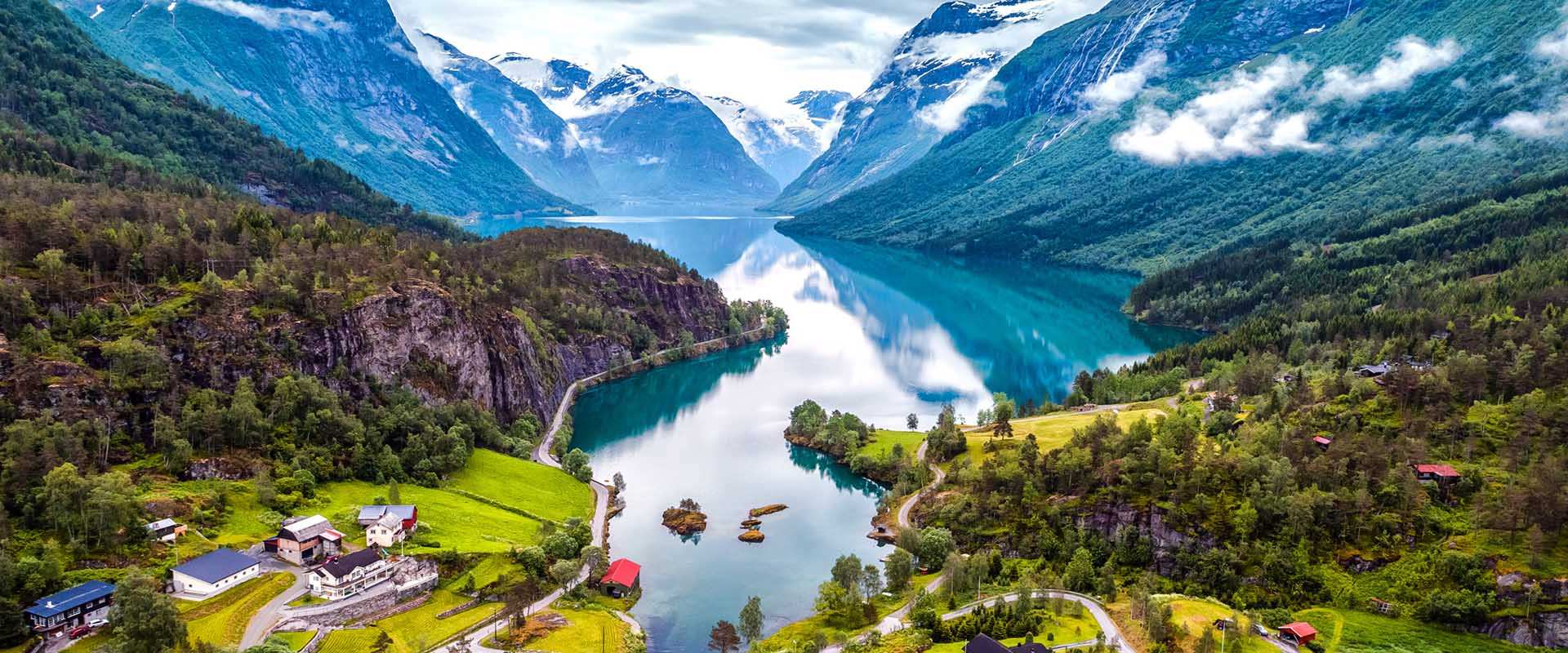
Norway cruises have a lot in store for everyone. There are several outdoor adventure activities that the adventure lover can indulge in. At the same time, those with an affinity towards tranquility can immerse themselves in Norway's rich culture and tradition by visiting places of eminence like museums and restaurants.
Some of the interesting activities here are:
Hunt the Northern Lights
The Aurora Borealis is one of the most beautiful and enigmatic experiences one can have in their lifetime. Visitors can only gawk in wonder at the green-hued light dancing in the bleak, dark nothingness of the night with the distant twinkle of the stars as their background. While Norway is close to the Arctic Circle, the Northern Lights can’t be witnessed that easily. Like every other thing of value, it takes time, effort, and hard work to witness the phenomenon. One can travel to remote corners like Tromsø and Svalbard to get a glimpse of the Northern Lights, although they’ll likely have to travel further, to a remote area, away from the bustle of the city and its light pollution, to get a glimpse. Oh, this journey must be taken during the peak winter months in Norway, so travelers have to mentally and physically prepare themselves for bone-chilling temperatures.
Outdoor Adventure Activities
Besides the scenic beauty of Norway, cruises offer travelers a chance to try their hands at a bunch of outdoor activities. Skiing across the valleys and mountains is highly recommended if traveling during cooler periods. Other than that, the wilderness of Norway is best explored in the company of friendly huskies who pull sleds through the thick blanket of snow.
Treks under the Moon to Visit Ice Caves
A cave is an interesting enough space, but a cave made of ice? Fascinating beyond comprehension. Beneath the mighty glaciers of Svalbard are ice caves formed as melted water freezes again. These ice caves are remote and take effort to reach. One can kayak or trek to these ice caves under the moonlit night. Interestingly, the structure of these caves alters every year, so one has to be ready for surprises.
Best time to cruise in Norway
Norway is blessed with wildlife that is a privilege to witness in one’s lifetime. Since a trip to Norway is not cheap, travelers must choose a suitable time to visit the country. Climate and temperatures vary across the vast landscape of Norway, so the duration of daylight available would also alter.
The best season to visit Norway is between May and September. The weather is pleasant, with the occasional drizzle and showers allowing tourists to view the beautifully thawed flora after the winter. Wildflowers bloom between May and June when the snow melts, and the fjords and rivers bubble with the melted snow. This is the Polar Summer when the sun never sets, which is an interesting experience. The summer officially begins in July and ends in August. Summers are relatively cooler than those in other nations, given Norway’s proximity to the Arctic Circle. Travelers flock to the streets during this season. This is also when visitors can bask in the sunlight at the beach, even at 10 PM! The autumn season in Norway spans from September through October. As the temperature drops, cultural festivals and events occur as the city braces for the coming winter onslaught. The sky is poetic, streaked with autumnal shades of red, auburn, and orange. The time between November to April marks the Polar Winter in Norway. Those interested in sighting the dancing Aurora Borealis are encouraged to voyage between these months since light pollution dips. Outdoor activities are impossible, but the Polar Jazz Festival at Svalbard, the Northern Lights Festival, and the Tromsøso International Film Festival more than make up for their absence.
How to get to Norway
The best way to reach Norway is via air, but hardly any international flights other than those flying within Europe stop at Oslo. Oslo International Airport is the main airport for Norway and is a stop for international flights from the European Union. It is hard to find flights to Oslo directly from other continents. It is advisable for travelers not from the European Union to take a flight to either Denmark or Sweden and take a connecting flight to Oslo to reach Norway. If travelers are already in the EU, they can conveniently reach Oslo via rail from neighboring cities like Stockholm. Cities in Norway are best connected via railways, so it is advised that travelers make maximum use of the public transportation system.
Reaching Longyearbyen is easy via a quick flight from Oslo. SAS and Norwegian are the two airlines that run regular flights to Oslo daily. Flights between May and September are easy to find since it is peak travel season. It takes 1.5 hours to travel to Longyearbyen from Tromsøso. The Svalbard airport is just 3 kilometers from the city.
Norway Cruise Tips
Here are a few things that travelers to Norway should keep in mind for a favorable experience:
Factor in Traveling Time
Norway is by no means a small country. With its population of 5 million, it may seem that Norway is a small nation. However, there’s a vast expanse to explore, and it takes time to travel from one place to another. What adds to that time are the fjords and the mountains that impede easy travel. As a result, there are long winding roads and railway lines. These little things, if not factored in, can cause many delays.
Traveling on a Budget Requires Planning
Norway, for the beautiful place that it is, is also expensive. It secures a high rank when it comes to daily expenditure. If not planned carefully, visitors can find themselves hemorrhaging money on little things. For instance, instead of hailing a cab, one can use Norway's efficient public transportation system to travel. Similarly, avoiding highly inflated prices at highway rest stops and gas stations is advised. Instead, it is recommended that travelers stock up on cheap goods from the local supermarket.
Wearing Sunscreen
Since Norway is a Scandinavian country with a relatively cold climate, people often presume that sunscreen is unnecessary. That could land travelers in serious trouble. The sun does shine in Norway; it can do quite a bit of harm if sunscreen is eschewed.
Be Aware of Closures
The weather in Norway runs on extremes. While during the peak months between May and September, one might find themselves among an influx of tourists, there won’t be any issue. But those traveling during the Polar Winter and Sunny Winter periods can experience certain closures. These closures can occur due to natural calamities or just heavy snowing. So, it is advised that trips are planned according to the objectives in mind.
Be Aware of the Duration of the Day
Days can be notoriously short in Norway, given its geographical location, which can ruin your daytime plans. It is essential to plan activities in accordance with the daylight available.
Booking Tickets in Advance
Tickets and hotel rooms fly off the shelves with lightning speed in Norway, so it is advised that all such arrangements are made at least 3 months in advance. One wouldn’t enjoy spending a night on the streets in sub-zero temperatures.
The Artic Lights are not Guaranteed
If visitors are adamant about looking at the Aurora Borealis, sadly, Norway is not the ideal way to go about it. Firstly, the Arctic Lights are hardly visible from cities like Longyearbyen or Oslo, where light pollution is heavy. One must be in the vicinity of the Arctic Circle to experience that natural phenomenon properly.
Respect the Local Culture
Several traveler guides are available for free on the internet to help people familiarize themselves with the local traditions and culture. For instance, Norwegians care deeply for their environment, considering it is already precarious. Hence, visitors must take all the necessary steps to minimize their carbon footprint. Tipping the serving staff is not a habit that is tolerated in Norway, nor is picking flowers in places like Longyearbyen.