Liveaboard.com

Chandelier Caves Liveaboard Diving

Our guests rated liveaboard diving in Chandelier Caves as 9.3

  • 100% Best Price Guarantee

Liveaboard Diving in Chandelier Caves

What to expect on a Chandelier Caves liveaboard

Liveaboards to Chandelier Caves are perfect for divers who are looking for a real cave diving experience. The Chandelier Caves are a system of five caverns connected by cave channels. Four out of five caves are filled with water, all with air pockets, and available for SCUBA diving in. They are located off the coast of Koror; the largest city of Palau, one of the main areas in the country of Micronesia located in the western Pacific Ocean.

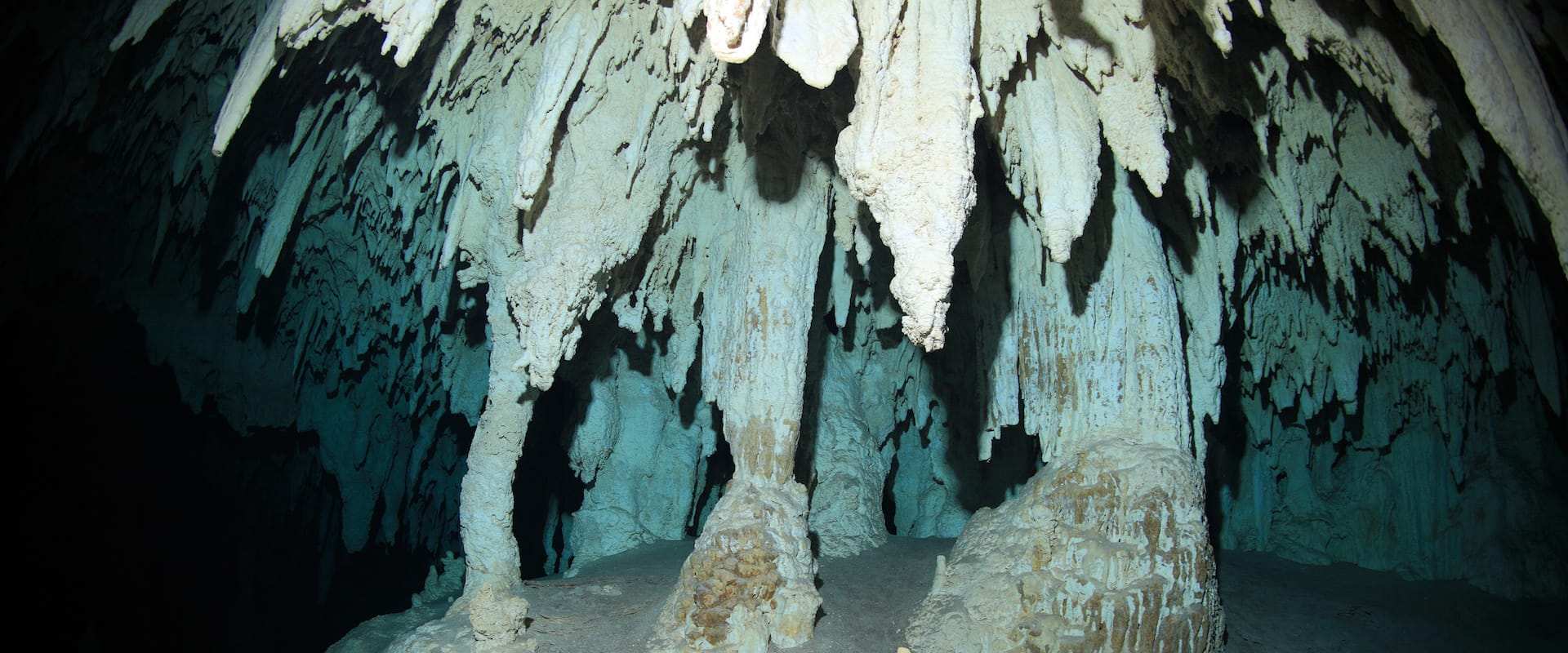
These caves were created thanks to many years of erosion of this limestone island, named Ngarol, and after the most recent ice age, the water rose and filled up four out of five of them. The reason for the name Chandelier Caves is that they are filled with stalagmites and stalactites with glimmer when you shine your torch on them, which is a truly beautiful sight. Liveaboards to Chandelier Caves generally visit them as the final stop, due to it being very close to land, and so is perfect for a good final experience.

What You Can See

The fact of the matter is that you will not see much if you do not bring a torch on your Chandelier Caves liveaboard. It is pitch black inside the caves, but when you bring a flashlight you will spot many creatures and interesting structures. The main attractions are the sparkling stalagmites and stalactites which are all over the caves. They have been formed from many years of rainwater penetrating the limestone rock of the island and bringing in Calcium Carbonate. This was before the ice age when the water level was lower and the caves were not filled with water. The walls of these caves are also covered in sponges that inhabit many species of crab and shrimps.

At the entrance of the caves you will swim through schools of sergeant and cardinalfish and on a lucky day, if you are patient, there is a chance to see the unique Mandarin Fish. The floor of the caves is made up of sand and silt, so if disturbed the visibility will get less, but undisturbed, the visibility can be excellent. This is definitely the most unique caves to dive in, in Micronesia.

Getting To Chandelier Caves

This dive site is located in the area of Palau and only 1.6km (1mi) away from the coast of the city of Koror, by the island of Ngarol. It is generally the last dive site that Palau liveaboards visit. A liveaboard is a great way to visit this site because you will have been diving a lot and your confidence will be up before diving into the darkness. Chandelier Caves liveaboards will depart from the main harbor in Koror called Malikal Harbour, and also return here.

The airport is located on the island of Babeldaob which is connected by a bridge to Koror. The airport is called The Roman Tmetuchl International Airport. There are only five destinations which have outgoing flights to Palau, so you would have to fly to one of these first; Philippines, Taiwan, South Korea, Japan, and Guam


Chandelier Caves Diving Reviews

  • Rating 9.3 out of 10
  • 9.3 Superb
  • Rating 9.6 out of 10
  • 9.6 Exceptional
  • BARBARA S
  • Flag of United StatesUnited States

Caves/caverns - nature’s own amazing works. Lots of coral outside the caves, but seeing the elusive mandarin fish was special.

Diving Chandelier Caves in June on the Palau Aggressor II
  • Rating 9.6 out of 10
  • 9.6 Exceptional
  • Edna D
  • Flag of United StatesUnited States

Awesome 4 chamber 'cave dive' with stalactites to view.

Diving Chandelier Caves in March on the Solitude One
  • Rating 10.0 out of 10
  • 10.0 Exceptional
  • Vincent L
  • Flag of United StatesUnited States

Awesome. This is definitely one of the more unique dive sites I've done.

Diving Chandelier Caves in September on the Palau Siren
  • Rating 8.8 out of 10
  • 8.8 Fabulous
  • Shelley S
  • Flag of United StatesUnited States

A fun expedition that was just a tiny bit nerve wracking if you have not dived in the dark before. Very beautiful caverns with gorgeous stalactites.

Diving Chandelier Caves in December on the Palau Siren


What to know about diving in Chandelier Caves

What is Chandelier Cave?

Chandelier Cave is a network of five limestone chambers in Palau's Rock Islands, four of which are reached by swimming underwater between air pockets, with stalactites hanging from the ceiling like the fixtures that give the cave its name. It's one of the most unusual dives in Palau — part cave dive, part air-filled cavern exploration.

Where is Chandelier Cave located?

The cave sits in Malakal Harbor, less than a mile (1.6 km) from most Koror-based dive shops, making it one of the quickest boat rides of any Palau dive site. It's often paired with a second dive at German Channel or Blue Corner on the same day.

How deep is Chandelier Cave?

The main entrance sits about 12 ft (4 m) below the surface, and most of the cave's swim-throughs stay shallow, generally within recreational no-decompression limits. The real challenge is navigation and buoyancy in tight, dark spaces, not depth.

Do you need cave diving certification for Chandelier Cave?

No formal cave certification is required since it's typically dived as a guided cavern dive within reach of ambient light and air pockets, but strong buoyancy control and comfort in enclosed spaces are essential. Divers who are claustrophobic or uneasy in darkness are generally advised to skip it.

Can you surface inside Chandelier Cave?

Yes — four of the five chambers have air pockets where divers can surface, remove their masks, and breathe normally between swim-throughs, and the fifth chamber is entirely above water. That's the "chandelier" effect: stalactites lit from below by divers' torches in air-filled rooms.

How many chambers does Chandelier Cave have?

There are five chambers in total — four water-filled chambers each with an air pocket, plus a fifth chamber that sits completely above the waterline. Reaching that fifth chamber typically means removing your dive gear and crawling through a tight, muddy passage.

What formed the stalactites in Chandelier Cave?

The stalactites and stalagmites formed over thousands of years when the cave sat above sea level, as rainwater dissolved and redeposited limestone drop by drop. Rising sea levels after the last ice age eventually flooded the lower chambers, leaving the formations submerged or partially underwater today.

Is Chandelier Cave suitable for beginner divers?

It's generally recommended for divers with some experience and solid buoyancy control, since navigating between air pockets in an overhead, low-light environment isn't ideal for the first few dives. Most operators still keep it accessible, though, since depths stay shallow and the swim-throughs are relatively short.

How do you get to Chandelier Cave?

It's a boat dive arranged through a Koror-based dive shop, reached via a very short ride across Malakal Harbor — often the closest named dive site to town. A guide is essentially mandatory given the cave's layout and low-visibility sections.

What should I bring to dive Chandelier Cave?

A reliable primary dive light (plus a backup) is essential for navigating the darker sections and finding your way between chambers, since natural light disappears quickly past the entrance. Many divers also bring a camera for the striking look of stalactites lit from below in the air-filled rooms.

How do you enter Chandelier Cave?

Divers descend through a roughly 10 ft (3 m) wide opening in the rock island, then swim through a series of tunnels connecting the water-filled chambers. The route is well known to local guides but not obvious to first-time visitors, which is another reason it's always done with one.

Can non-divers see Chandelier Cave?

Not really — because the cave's chambers are reached through underwater swim-throughs, experiencing it requires scuba gear and a guide. Snorkelers can't access the interior chambers the way divers can.

Why is it called Chandelier Cave?

The name comes from the dense clusters of stalactites hanging from the ceilings of the cave's air-filled chambers, which catch the divers' torchlight and resemble chandeliers. It's one of the more evocative dive-site names in Palau, and an accurate one once you're inside.

Is Chandelier Cave dark inside?

Yes, beyond the entrance, the cave quickly loses natural light, so most of the dive is done by torchlight. The interplay of light beams on wet limestone and stalactites is part of the appeal, but it does mean good, reliable dive lights are non-negotiable.

How long does a Chandelier Cave dive take?

A typical guided visit lasts about 30–45 minutes and covers the accessible water-filled chambers, with extra time if your guide takes you on foot into the fifth, air-only chamber. It's usually done as a shorter second or third dive of the day, given its shallow depth.

We’re here to help, 24/7.

Connect with our expert travel consultants to plan your next trip.

  • Andrea Martinez
  • Oksana Kovaleva
  • Josue Zarco
  • Farah Celada-Benito
  • Juliane Ball
  • Mylene Issartial
  • Nina Kapp