Liveaboard.com

Saumlaki Liveaboard Diving

Compare and book your trip online.

  • 100% Best Price Guarantee

Liveaboard Diving in Saumlaki

What to Expect On a Saumlaki Liveaboard

Liveaboards to Saumlaki serve as the gateway to a group of islands known as the Forgotten Islands. The Forgotten Islands comprise roughly 1000 km of very remote, beautifully preserved archipelagic islands stretching from Timor in the southwest, through the Banda Sea, to West Papua to northeast Indonesia.

The island of Saumlaki forms part of the Tanimbar Islands. It is situated on the southern tip of Yamdena Island and is the chief town of the Tanimbars. Liveaboard diving in Saumlaki is generally the first stop in this area.

Liveaboard diving from Saumlaki

Saumlaki liveaboards can visit many islands and even more dive sites while sailing through the Forgotten Islands. These islands are so remote that most sites have never seen a diver. It is safe to say that diving here feels like a real adventure, and many dives will be exploratory. Divers can expect 3 -4 dives daily on their Saumlaki diving safari.

Visibility around most of these islands is excellent, especially surrounding islands formed by volcanic activity. The lack of soil erosion and steady climate means visibility can be over 130 feet (40 m). Muck sites have reduced visibility, but this is to be expected. Ocean temperatures vary between 81º Fahrenheit (27ºC) in July and 86º Fahrenheit (30ºC) in December.

Among some of the known sites that your Saumlaki liveaboard will visit are Wetar, Nunukae, Leti, Babar, Pantar, Palu, and Nusa Laut. If so desired, it is often possible to create custom itineraries to suit your diving experience and visit sites you want, or indeed do a spot of exploration.

Sailing from Saumlaki often involves visiting the island of Wetar, a favorite for many divers lucky enough to dive in this region. The rugged terrain largely consists of rocky outcrops with coral-encrusted walls and very big fish.

Black sands surround the island of Palu, which features a spectacular patch coral reef system. Shoals of fusiliers and pyramid butterflyfish accumulate above coral bommies, while batfish and eagle rays stay close to the sand. It is even possible to see oceanic whitetip reef sharks patrol the spaces between the coral.

For big pelagic species, Manawoka has become a go-to site. Vast shoals of barracuda can be seen here, alongside manta rays and gigantic groupers. The strong currents attract blacktip reef sharks, while hammerhead sharks have also been spotted lurking in the area.

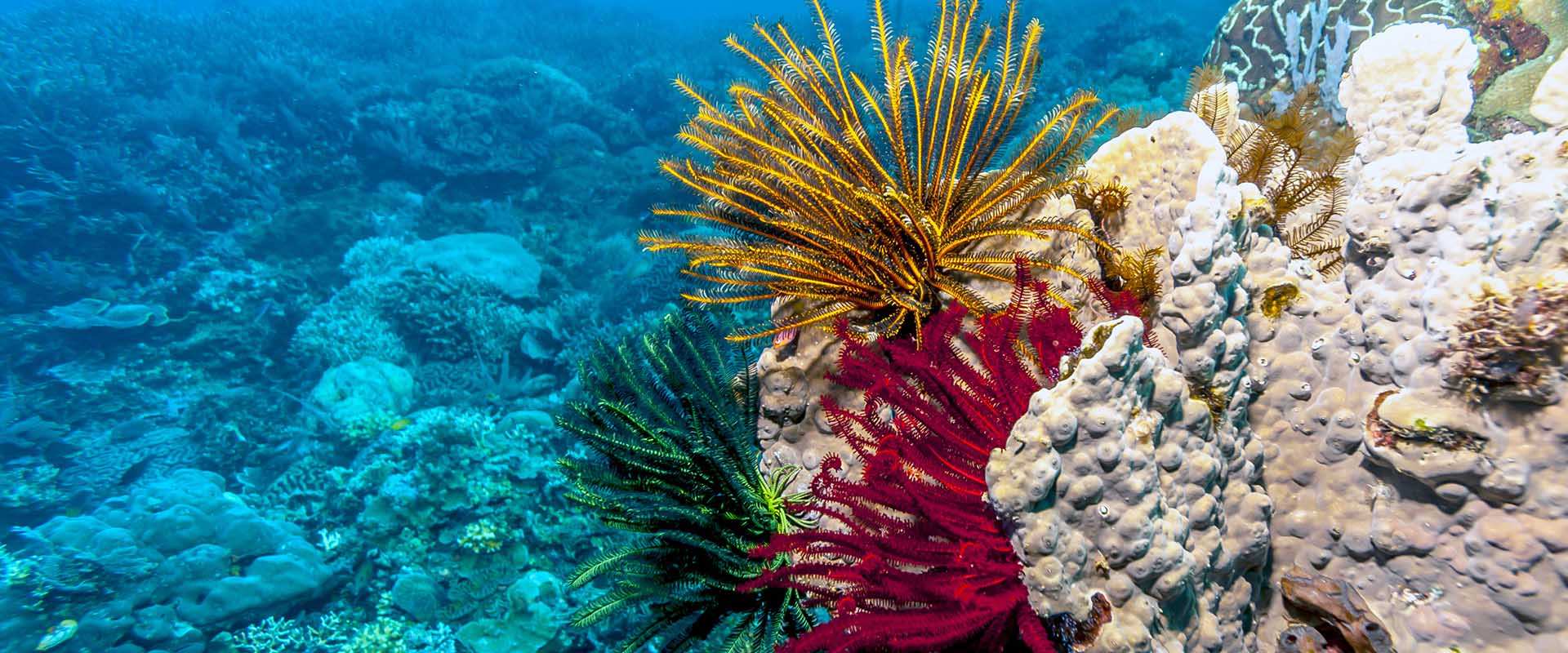
Nusa Laut has some of the prettiest coral gardens, with turquoise vases and large orange and yellow sponges. Shoals of vibrant anthias can be seen almost everywhere, alongside surgeonfish and ghost pipefish. Barracuda typically like to patrol the skirts of the reef, while the abundant food sources attract hammerheads.

Getting To Saumlaki

Reaching Saumlaki usually involves several flights, owing to the remoteness of the location. Like many other liveaboards in Indonesia, we begin our journey by catching a connecting flight to Singapore. From here, we go to Jakarta via Soekarno Hatta International Airport. Although an international airport, most long-haul flights cannot fly directly to Jakarta.

To reach Ambon from Jakarta, it is possible to take a direct flight and a flight to Saumlaki, where your liveaboard vessel will be waiting.




What to know about diving in Saumlaki

Where is Saumlaki?

Saumlaki is a town in the Tanimbar Islands, in southeastern Maluku, Indonesia, used as a remote liveaboard stop known for pristine, rarely-dived reefs. It's one of the more far-flung gateways in the eastern Indonesian dive circuit.

What region of Indonesia is Saumlaki in?

Saumlaki is located in the Tanimbar Islands, part of Maluku province in southeastern Indonesia. It's reached mainly by domestic flight or as a stop on select liveaboard routes through the Banda Sea region.

How do you get to Saumlaki?

Saumlaki is reached mainly by liveaboard or occasional flights into the Tanimbar Islands, given its remote position in southeastern Maluku. It's far enough off the beaten path that most visitors arrive as part of a longer liveaboard route in eastern Indonesia rather than on a standalone trip.

What makes Saumlaki's reefs different from more popular Indonesian dive destinations?

Saumlaki's reefs are rarely dived compared to hotspots like Raja Ampat or Komodo, which have kept them in a notably pristine condition. That relative isolation is the main draw for divers seeking untouched reefs rather than crowded, well-mapped sites.

Is Saumlaki accessible by day boat or only by liveaboard?

Saumlaki functions almost entirely as a liveaboard stop rather than a day-boat destination, given its remote position in the Tanimbar Islands. There's little in the way of dedicated day-trip dive infrastructure based in the town itself.

What is the best time of year to visit Saumlaki?

As with much of eastern Indonesia, Saumlaki is generally best visited during the dry season, roughly April through October, when seas are calmer for the long liveaboard routes that reach it. Conditions and itinerary timing can shift, so it's worth confirming with an operator (as of 2026).

Is Saumlaki good for underwater photography?

The appeal of Saumlaki for photographers lies in capturing reef systems that see far less camera traffic than Indonesia's better-known sites. Both macro and wide-angle shooters can find material here, since the draw is the reef's untouched condition rather than one specific type of subject.

What's the water temperature like around Saumlaki?

Water temperatures around Saumlaki fall within Indonesia's typical range of roughly 79–86°F (26–30°C), consistent with much of the Maluku region. A standard tropical wetsuit is generally sufficient for most divers.

What marine life might you encounter around Saumlaki?

Because Saumlaki's reefs see so little dive traffic, they tend to host healthy fish populations and coral growth typical of well-preserved Coral Triangle reef systems. Specific sightings vary by site and season, as with any remote, lightly-surveyed dive area.

Is Saumlaki suitable for experienced divers only, or beginners too?

Saumlaki doesn't have a reputation for the extreme currents found at sites like Komodo's pinnacles, but its remoteness and limited support infrastructure make it better suited to divers with some open-water experience. It's generally marketed toward divers seeking pristine reefs rather than as an entry-level destination.

What else is there to see in Saumlaki besides diving?

Saumlaki serves primarily as a gateway to the Tanimbar Islands' reefs rather than a major non-diving tourist stop, and its main appeal for travelers is the surrounding remote marine environment. Visitors typically pass through the town itself rather than spending extended time there.

Why do liveaboards include Saumlaki on their itineraries?

Liveaboards add Saumlaki to extend a route into genuinely untouched reef territory, giving divers access to sites with minimal prior dive traffic. It's the kind of stop that appeals to repeat visitors to Indonesia looking for something beyond the well-known circuits.

We’re here to help, 24/7.

Connect with our expert travel consultants to plan your next trip.

  • Nina Kapp
  • Josue Zarco
  • Andrea Martinez
  • Juliane Ball
  • Ester Canali
  • Farah Celada-Benito
  • Mylene Issartial