Liveaboard.com

Satonda Liveaboard Diving

Compare and book your trip online.

  • 100% Best Price Guarantee

Liveaboard Diving in Satonda

Liveaboard Diving Around Satonda, Indonesia

Embark on an unparalleled underwater journey in Satonda, Indonesia, where vibrant coral reefs, diverse marine life, and breathtaking dive sites await. Satonda, situated in the heart of the Coral Triangle, is a diver's paradise, offering an immersive experience for enthusiasts seeking adventure beneath the surface.

Diving around Satonda is a unique and exhilarating experience. The region boasts crystal-clear waters, vibrant coral gardens, and many marine species. Whether you're a novice or an experienced diver, Satonda offers a range of dive sites suitable for all levels. Explore underwater caves, encounter schools of colorful fish, and marvel at the intricate coral formations that make this destination a hidden gem in the diving community.

When is the Best Time to Dive in Satonda?

Plan your trip to Satonda between April and November for optimal diving conditions. During these months, the weather is generally dry, and the visibility underwater is exceptional. The water temperature remains comfortable, creating the perfect environment to witness the stunning underwater landscapes and marine life that Satonda has to offer.

What Type of Diving can be done at Satonda?

Satonda caters to various diving preferences, from thrilling wall dives to tranquil coral gardens. Explore the renowned "Pinnacles of Satonda" for an awe-inspiring vertical wall dive or discover the intriguing underwater caves at "Grotto Garden." For those seeking macro life, the "Secret Bay" is a haven for critters and nudibranch enthusiasts. Satonda's diverse topography ensures a captivating diving experience for every underwater explorer.

What Marine Life Can Be Seen at Satonda?

Satonda's rich marine biodiversity includes sightings of majestic whale sharks, graceful mantas, and elusive sharks. The vibrant coral reefs are teeming with macro life, offering photographers and marine enthusiasts a paradise. Keep your eyes peeled for the unique and colorful marine creatures that inhabit these waters, creating an unforgettable underwater spectacle.

Top Dive Sites in Satonda

  1. Pinnacles of Satonda: Experience a vertical wall dive with stunning coral formations.
  2. Grotto Garden: Explore underwater caves and witness the mesmerizing play of light and shadows.
  3. Secret Bay: Uncover the hidden treasures of macro life in this diver's paradise.
  4. Satonda's Coral Gardens: Immerse yourself in the vibrant colors of diverse coral species.
  5. Whale Shark Alley: Encounter the ocean's gentle giants in this renowned dive location.


What to know about diving in Satonda

What is the lake on Satonda Island?

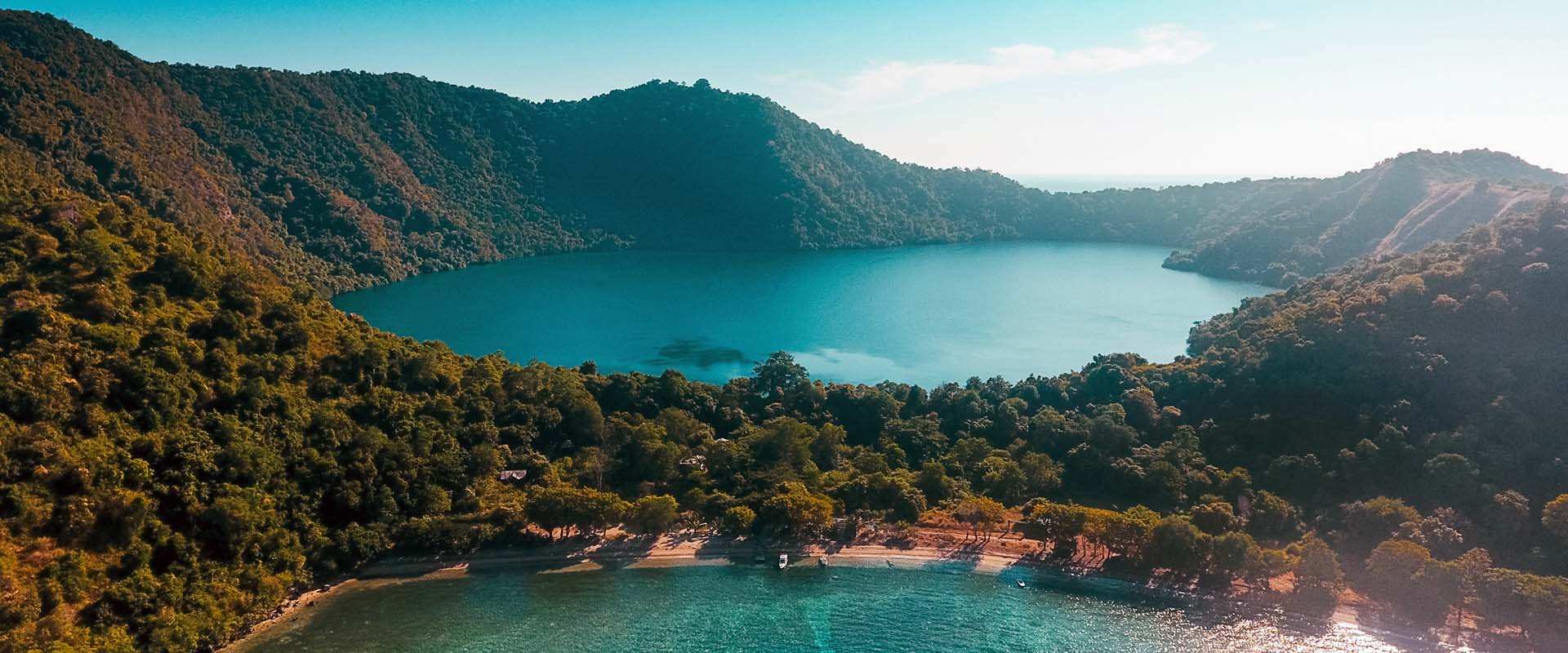
Satonda Island, off the north coast of Sumbawa, holds a unique saltwater crater lake formed after Mount Tambora's catastrophic 1815 eruption sent seawater into the volcanic crater. The lake is closed to swimming but can be viewed via a short walking trail from the beach.

Where is Satonda Island?

Satonda Island sits just off Sumbawa's northern coast, near Moyo Island, and is a common stop on Komodo-to-Lombok liveaboard routes. Beyond its crater lake, the island offers reef snorkeling and diving in the surrounding shallow waters.

What diving is available around Satonda Island?

The fringing reef around Satonda offers calmer, more sheltered diving and snorkeling than Komodo National Park's famous current-swept sites further east, making it a relaxed stop on longer itineraries. Expect healthy coral cover and typical reef fish rather than big pelagic action. It's often used as an easier, recovery-style dive between more demanding Komodo sites.

How do travelers get to Satonda Island?

Satonda is most commonly visited as a stop on multi-day liveaboard routes running between Komodo National Park and Lombok, arriving by boat rather than by land. It sits just off Sumbawa's coast near Moyo Island, so it's often paired with a Moyo stop on the same trip. Independent access from mainland Sumbawa is possible but far less common than arriving as part of a boat itinerary.

What's the best time of year to visit Satonda Island?

The dry season, roughly April through October, brings calmer seas for the boat crossing and generally better underwater visibility. Outside those months, itineraries that include Satonda are less common since sea conditions in the wider Sumbawa–Komodo corridor can be rougher. Clear, sunny days also make the crater lake more photogenic.

What makes Satonda Island worth a stop?

It's an unusual double feature: a short walk leads to a unique saltwater crater lake, while the surrounding sea offers an easy, low-key reef dive or snorkel. That combination of an unusual geological feature and gentle diving makes it a nice change of pace from Komodo's more intense current-driven sites. Its volcanic scenery also makes for striking photos from the water.

Can you swim in Satonda's crater lake?

Many visitors do wade or swim in the lake's saltwater, which sits separate from the surrounding sea within the island's volcanic crater. It's generally treated as a scenic, easy stop rather than a serious swimming destination, and the island's facilities are minimal. Visitors should bring their own water and supplies since there's little infrastructure nearby.

What marine life might you see snorkeling or diving near Satonda?

Expect a fairly typical, healthy Coral Triangle reef: parrotfish, wrasses, small reef sharks, and good coral cover, without the large schooling pelagics that draw divers farther into Komodo National Park. It's a solid spot for slower, macro-focused observation. Turtles are also occasionally spotted on the surrounding reef.

How strong are the currents around Satonda Island?

Currents here are generally mild compared to Komodo National Park's signature drift sites, which is part of why Satonda is often used as an easier stop on liveaboard routes. That makes it approachable for less experienced divers and snorkelers alike. Conditions can still shift with the tide, so it's worth checking with the boat crew before entering the water.

What other destinations are commonly combined with a Satonda Island visit?

It's typically paired with nearby Moyo Island, known for its waterfall and reef, as both sit along the same Komodo-to-Lombok liveaboard corridor. Many itineraries treat Satonda and Moyo as a linked pair of stops between the bigger draws of Komodo National Park and Lombok. Some routes also connect onward toward Bima on Sumbawa as a transit point.

Is Satonda Island good for underwater photography?

Its calmer water and good coral cover make it manageable for photographers who find strong-current sites frustrating to shoot, and the crater lake above water offers its own scenic, landscape-style shots. It's better suited to relaxed reef and macro photography than dramatic wide-angle pelagic shots. Clear, sunny days give the best light for both.

What's the water temperature like around Satonda Island?

Water temperatures generally fall within Indonesia's typical 79–86°F (26–30°C) range, though the wider Sumbawa–Komodo region can run slightly cooler due to seasonal upwelling than areas further west. A standard 3mm wetsuit is usually sufficient. It doesn't see the sharp temperature drops that hit destinations further southeast, like Alor.

Is diving or snorkeling around Satonda suitable for beginners?

Yes — the calmer conditions here make it one of the more approachable stops on a Komodo-area itinerary, in contrast to the strong-current sites the region is best known for. It's a good option for newer divers or anyone wanting a relaxed day between more demanding dives. Snorkelers with limited experience can also comfortably explore the shallow reef.

How long do visitors typically spend at Satonda Island?

Most itineraries treat it as a half-day stop, combining the short walk to the crater lake with a single reef dive or snorkel session before moving on. It's rarely an overnight destination in its own right, since accommodation and facilities on the island are minimal. Longer stays are uncommon outside of liveaboard scheduling.

What should first-time visitors know before visiting Satonda Island?

Facilities are minimal, so it's worth bringing your own drinking water, sun protection, and reef-safe footwear for the walk to the crater lake. Because it's usually visited as part of a boat itinerary rather than independently, timing at the island is generally set by the boat's schedule rather than the visitor's own. It's a low-key stop best appreciated as a change of pace from bigger Komodo sites.

We’re here to help, 24/7.

Connect with our expert travel consultants to plan your next trip.

  • Farah Celada-Benito
  • Josue Zarco
  • Juliane Ball
  • Oksana Kovaleva
  • Mylene Issartial
  • Andrea Martinez
  • Ester Canali