Liveaboard.com

Truk Lagoon Liveaboard Diving

Our guests rated liveaboard diving in Truk Lagoon as 8.8

  • 100% Best Price Guarantee

Liveaboard Diving in Truk Lagoon

What to expect on a Chuuk (Truk) Lagoon Liveaboard

Liveaboard diving in Truk (or Chuuk) lagoon is perfect for wreck lovers. Chuuk is a state within the Federation of Micronesia, and Truk (or Chuuk) lagoon is a lagoon located here which has a lot of history in it. In World War II this lagoon was used as a Japanese naval base, but then in 1944 the United States attacked the lagoon during "operation hailstone." During this attack, more than 60 ships were sunk and more than 200 airplanes went down. About 70 years later this has become an opportunity for more than 48 wreck dive sites to be created. The waters here are deep, down to 100m (330ft), and filled with many historical war artifacts. This is definitely a mecca for wreck divers, and for the large majority, you will need to be a more advanced diver to dive here. The water is at quite a temperate temperature throughout the year, between 26 and 30 degrees Celsius (78-86 degrees Fahrenheit). The wrecks lay between 18m (60ft) and 40m (150ft). Just as most of the Micronesia area, the dry season which runs from December to April is the best time to go, even though you can dive there all year round. It would be even more beneficial for you to be a Nitrox diver, then you can explore even more whilst on your Chuuk (Truk) Lagoon liveaboard.

What You Can See

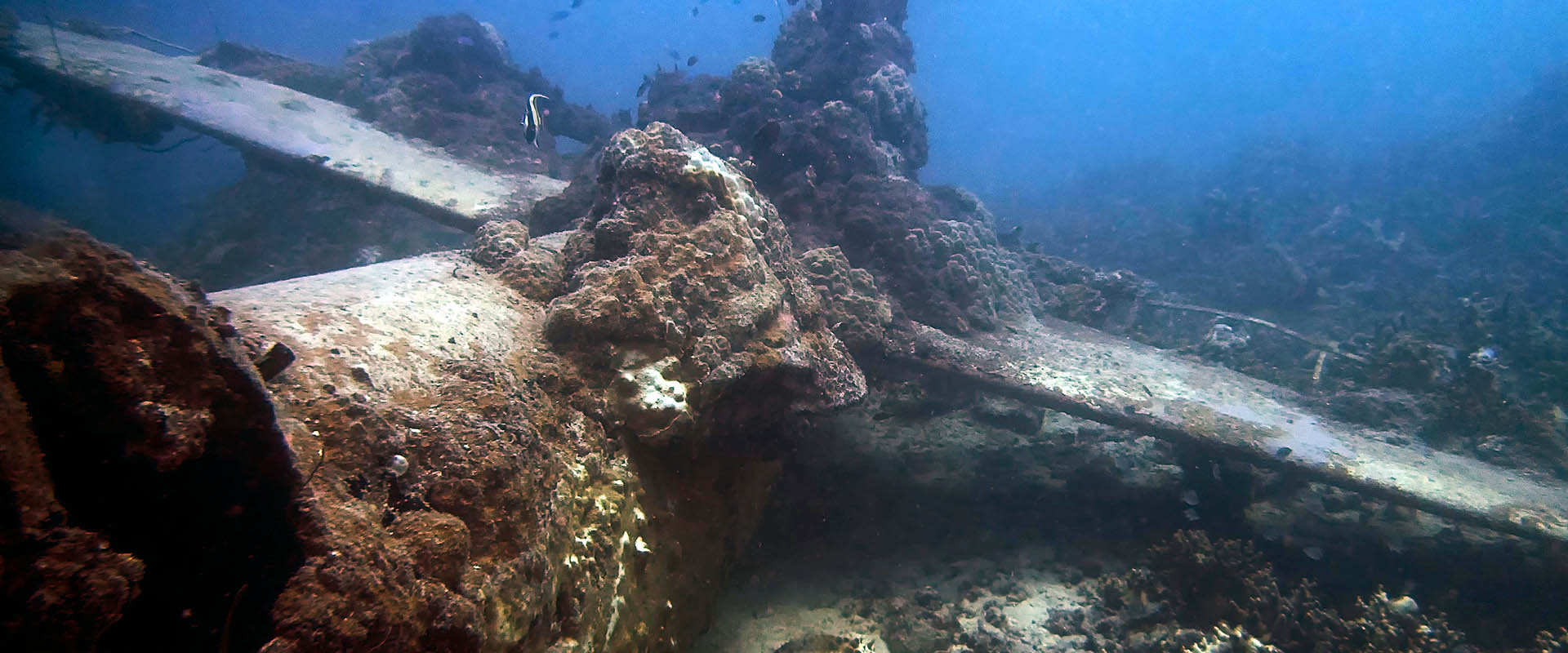
Liveaboards to Chuuk (Truk) Lagoon will have countless wrecks to choose from. The Truk lagoon was once referred to as the "Ghost fleet of Truk lagoon" as many thought the souls of the 3000 people who died here were haunting the area and it definitely adds to the eerie but impressive feeling of the dives. Along with the wrecks themselves, many of their cargo holds were completely filled, so you will see things ranging from tanks to bulldozers, motorcycles, boxes of ammunition, weapons, and even smaller things such as cutlery and other personal belongings. After so many years of being submerged, they have all created their own little marine ecosystems with sponges and corals growing left, right, and center. You will not be the only ones swimming around this area as Grey reef sharks are often spotted here. Along with them, multiple other marine species are spotted from time to time including stingrays, eagle rays, turtles, jellyfish, and schools of colorful, tropical fish.

Getting To Chuuk (Truk) Lagoon

Chuuk is located in the Caroline Islands within the Federation of Micronesia, and the capital city of the state of Chuuk is Weno where a third of the entire Chuuk state population lives. Weno has an international airport called Chuuk International Airport. There are only three airlines that fly to Chuuk, with the main route being via Guam from Honolulu with United Airlines. They are not multiple flights a day so you definitely need to check flights so you are not stopping over in Guam for lengthy layovers. Once in Weno, our Micronesia liveaboards offer itineraries which will also spend some days in the area, and then you can visit many of the sites. But please do remember to check any requirements for a liveaboard trip.


Truk Lagoon Diving Reviews

  • Rating 8.8 out of 10
  • 8.8 Fabulous
  • Rating 10.0 out of 10
  • 10.0 Exceptional
  • Priyanta D
  • Flag of United StatesUnited States

There is a reason that since it was discovered by Jacques Cousteau, that Chuuk Lagoon (to give it its proper non-divers name) is seen as the wreck diving capital of the world.

Diving Truk Lagoon in February on the Pacific Master
  • Rating 9.2 out of 10
  • 9.2 Superb
  • Anne Marie T
  • Flag of United StatesUnited States

The wrecks are in untouched condition. Given how long ago this was, the lagoon has preserved its history very well.

Diving Truk Lagoon in December on the Pacific Master
  • Rating 8.0 out of 10
  • 8.0 Very good
  • Chris S
  • Flag of AustraliaAustralia

World renowned wreck diving destination.

Diving Truk Lagoon in December on the Pacific Master


What to know about diving in Truk Lagoon

Where is Truk Lagoon?

Truk Lagoon (officially Chuuk Lagoon) sits in Chuuk State, part of the Federated States of Micronesia, about 630 miles (1,000 km) southeast of Guam and roughly 2,000 miles (3,200 km) southeast of Tokyo. Its huge natural harbor, ringed by a barrier reef, made it Japan's main Pacific Fleet base in WWII — and today makes it one of the world's premier wreck-diving destinations.

How deep is Truk Lagoon?

The lagoon itself averages around 200 ft (60 m) deep, but most of its famous wrecks sit much shallower — the majority lie at 100 ft (30 m) or less, with a handful of technical wrecks like the San Francisco Maru dropping past 160 ft (50 m). That range means Truk Lagoon rewards everyone from newly certified divers to technical wreck specialists.

How do you get to Truk Lagoon?

Most visitors fly into Chuuk International Airport on Weno Island, typically connecting through Guam on United Airlines as of 2026. Liveaboards and shore-based dive resorts then run day boats directly out to the lagoon's wreck sites, many just 20–40 minutes from the airport.

How many wrecks are in Truk Lagoon?

More than 50 Japanese naval and merchant vessels, plus around 275 aircraft, sank in Truk Lagoon after the US Operation Hailstone air raids in February 1944. It's often called the world's largest ship graveyard, and only a fraction of the wrecks are regularly dived.

What is the best time to dive Truk Lagoon?

The dry season, roughly November to April, brings the calmest seas and best visibility, though the water stays warm at 82–86°F (28–30°C) year-round. Visibility runs about 40–60 ft (12–18 m) on average, dropping after heavy rain when runoff stirs up the lagoon's interior.

Do you need wreck diving certification for Truk Lagoon?

Many of Truk Lagoon's shallower wrecks, like the top decks of the Fujikawa Maru, are accessible to Open Water divers with a guide, but penetrating cargo holds or engine rooms typically requires wreck diving certification. Deeper wrecks such as the San Francisco Maru are technical dives reserved for advanced or trimix-certified divers.

Why did so many ships sink in Truk Lagoon?

In February 1944, US carrier aircraft launched Operation Hailstone, a surprise raid that caught Japan's Combined Fleet largely at anchor in what it considered an impregnable base. Two days of bombing sank dozens of warships and supply vessels loaded with fuel, ammunition, and equipment, much of which remains visible on the wrecks today.

What marine life do you see diving Truk Lagoon?

Decades of coral growth have turned the wrecks into artificial reefs thick with soft corals, sponges, and anemones, attracting reef fish, batfish, and the occasional passing shark or ray. The wildlife draw is secondary to the wrecks themselves, but the coral-encrusted superstructures make for some of the most photogenic diving anywhere.

Is Truk Lagoon good for beginners?

Yes, to a point — several wrecks like the upper decks of the Fujikawa Maru and Shinkoku Maru sit in the 30–60 ft (9–18 m) range and suit newer divers with a guide, but the lagoon's signature deep and penetration dives are for experienced wreck divers only. Most liveaboards mix skill levels across an itinerary so everyone gets suitable dives.

What is the water temperature in Truk Lagoon?

Truk Lagoon stays warm year-round at about 82–86°F (28–30°C), so most divers get by with a 3mm wetsuit, though a 5mm suit is worth packing for multiple dives a day or longer wreck penetrations. Surface temperatures can feel even warmer during the region's dry season.

What is the most famous wreck in Truk Lagoon?

The Fujikawa Maru is generally considered the signature wreck, thanks to its intact Zero fighter plane parts, engine room, and encrusted deck guns, which sit between 30 and 111 ft (9 and 34 m). It's typically the first wreck new visitors dive and often the one they remember most.

Can you see aircraft wrecks in Truk Lagoon?

Yes — beyond the ships, Truk Lagoon holds wreckage from roughly 275 Japanese aircraft destroyed during Operation Hailstone, some still visible in the cargo holds of ships like the Fujikawa Maru, and others scattered on the lagoon floor near former airstrips. Dedicated aircraft wrecks are less commonly dived than ships but are sought out by wreck specialists.

What should I bring for a Truk Lagoon wreck diving trip?

Beyond standard gear, a good dive light is essential for exploring holds and engine rooms, and many divers bring a reel and backup light for any planned penetration dives. A camera is almost mandatory — the combination of coral-covered machinery and shafts of light through open decks makes for some of the most striking wreck photography anywhere.

How do liveaboards access Truk Lagoon?

Liveaboards typically dock or moor near Weno, Chuuk's main island, and run day boats out across the lagoon to reach wrecks scattered near the barrier reef, some over an hour's boat ride from port. Most itineraries are built around a handful of "hub" wrecks near Weno, plus one or two longer runs to more remote sites.

We’re here to help, 24/7.

Connect with our expert travel consultants to plan your next trip.

  • Oksana Kovaleva
  • Nicole Laughlin
  • Josue Zarco
  • Andrea Martinez
  • Nina Kapp
  • Farah Celada-Benito
  • Juliane Ball