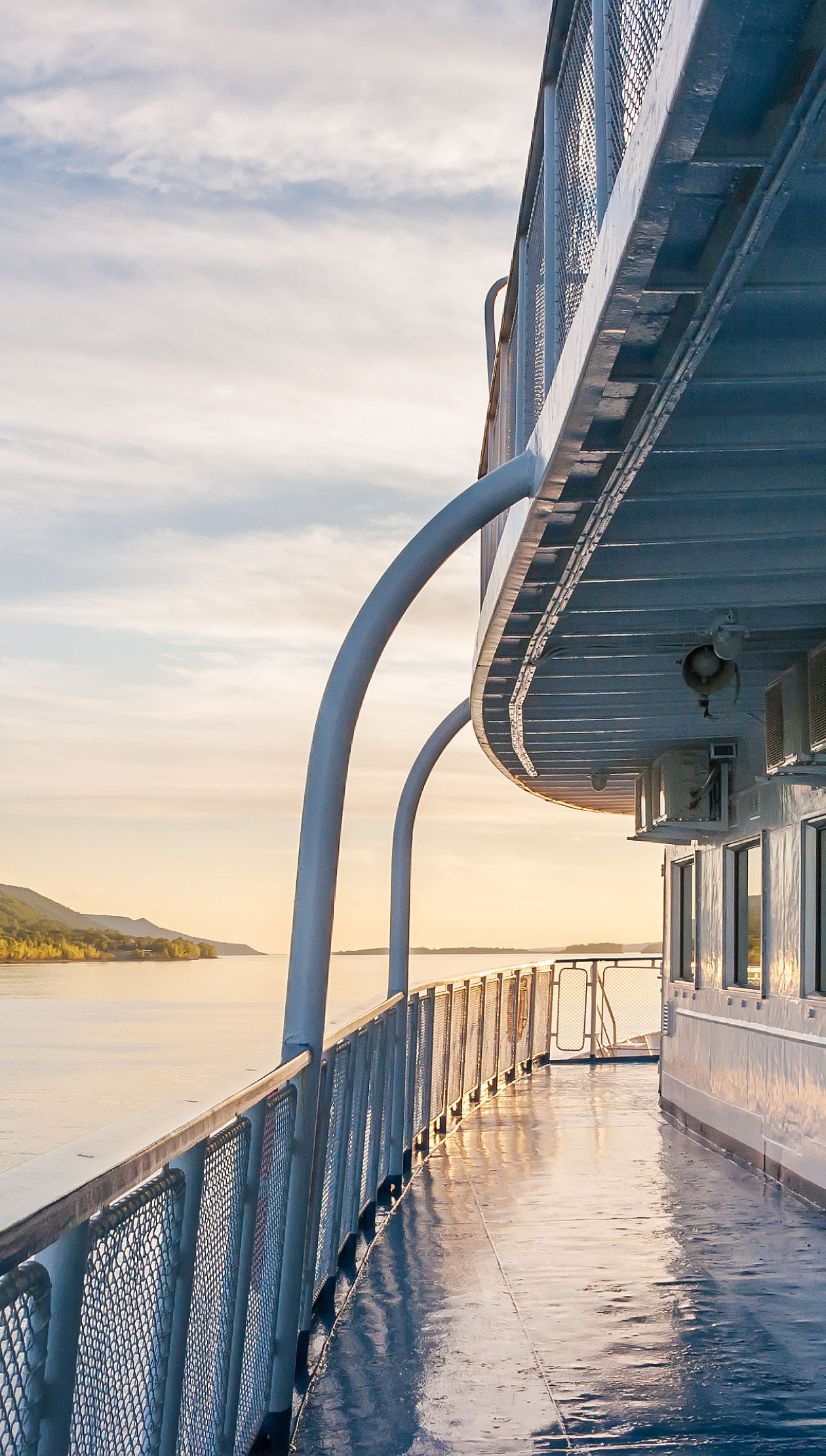
Yet a river cruise through Wolgast can extend far beyond the Baltic shore. Longer itineraries connect the region with a remarkable network of rivers, canals, lakes, and inland waterways leading toward the Oder-Havel system, Berlin, Oranienburg, and Potsdam. The transition is part of the adventure. Coastal horizons gradually give way to quiet canals, forest-lined banks, engineering landmarks, lake districts, palace gardens, and historic cities. Few European journeys offer such a vivid progression between maritime landscapes and the cultural heart of inland Germany.
Wolgast provides an atmospheric starting point or port of call on northern waterway itineraries. The town's waterfront setting immediately establishes its maritime character, while its historic center rewards exploration on foot. Travelers can wander between traditional streets, waterfront viewpoints, churches, and reminders of the town's long relationship with regional trade. The bridge linking Wolgast with Usedom emphasizes the town's role as a gateway between mainland Germany and the Baltic coast. Excursions may extend toward beaches, nature areas, or neighboring coastal communities before the ship continues into the inland waterway system.
History accompanies travelers throughout the voyage. Wolgast introduces a world of old trading ports, brick architecture, maritime heritage, and the nearby beaches and nature reserves of Usedom. Farther inland, the Havel reveals royal estates, medieval towns, Cold War landmarks, parks, lakes, and the monumental cultural landscape surrounding Potsdam and Berlin. Together, these waterways create a journey rich in contrasts, making river cruises in Germany especially rewarding for travelers who appreciate history, nature, regional cuisine, and slow exploration.
From Wolgast to the Havel River
Wolgast itself lies on the Peene waterway rather than directly on the Havel. However, northern river cruise itineraries can connect Wolgast and the Baltic coast with the Oder-Havel waterways before continuing toward Berlin, Potsdam, and the broader Havel region. This interconnected network gives travelers the opportunity to experience several distinct landscapes during a single voyage.
The Havel River is particularly appealing for leisurely cruising. Instead of dramatic mountain gorges or steep vineyard slopes, travelers encounter interconnected lakes, woodland, wetlands, historic settlements, landscaped parks, and elegant waterfront architecture. The river's broad, peaceful character encourages a slower style of travel in which palace gardens, lakeside villages, quiet harbors, and sunset views become as memorable as major city landmarks.
Oranienburg: Palaces, Canals, and Northern Approaches
River cruises through Oranienburg reveal a quieter side of the waterways north of Berlin. The town sits among canals, lakes, and river routes that have long connected the capital with northern Germany. Its palace and landscaped grounds provide an elegant contrast to the surrounding waterways, while nearby locks and canals demonstrate the engineering that makes extended river journeys possible. Oranienburg is also associated with difficult chapters of twentieth-century history, lending considerable depth to historically focused excursions. For river travelers, it marks the transition from metropolitan Berlin to the green landscapes beyond.
Berlin and Spandau: Where City Life Meets the Havel
Berlin adds energy and cultural variety to a Havel itinerary. Around Spandau, the waterways broaden into an attractive landscape of lakes, islands, marinas, and wooded banks before continuing toward the center of the capital. Excursions can introduce travelers to Berlin's museums, monuments, architecture, and twentieth-century history, while scenic cruising reveals a surprisingly green side of one of Europe's largest cities. The combination of urban exploration and relaxed time on deck makes Berlin an important bridge between the journey's natural and cultural experiences.
Potsdam: Palaces and Parks Beside the Water
Potsdam river cruises are among the cultural highlights of the Havel. Lakes and waterways surround a landscape shaped by royal ambition, formal gardens, grand residences, and wooded parkland. Sanssouci Palace and its gardens are the best-known attractions, while the wider city offers additional palaces, museums, historic neighborhoods, and elegant streets. Approaching Potsdam by water provides an especially fitting perspective: architecture appears between trees and across lakes, creating a gentle progression between nature and monumental history.
Werder: Orchards, Islands, and Rural Havel Scenery
West of Potsdam, Werder introduces a softer, more rural atmosphere. Orchards, gardens, islands, and waterways create a landscape that feels far removed from nearby Berlin. Walking excursions through the old town reveal narrow streets and attractive waterfront views, while the surrounding countryside is associated with fruit growing and local produce. Seasonal tastings and relaxed outdoor excursions fit naturally into river cruise itineraries. Werder is the kind of destination where the pleasure comes not from rushing between major monuments but from experiencing the landscape at the gentle pace of the river.
Brandenburg an der Havel: Medieval Heritage on the River
Brandenburg River Cruises bring travelers into one of the region's historic centers. Waterways weave around old districts, churches, bridges, and green islands, giving the town an intimate relationship with the river. Medieval architecture and centuries of regional history make guided walking tours especially rewarding. The surrounding lakes and wetlands also introduce a quieter natural dimension, allowing travelers to combine cultural excursions with cycling, birdwatching, or simply watching the scenery pass from the ship's deck.
Rathenow: Nature and Industrial Heritage
Rathenow combines river landscapes with an unusual industrial story. Historically associated with optical manufacturing, the town adds a scientific and technological dimension to an itinerary otherwise dominated by palaces, churches, and maritime history. Parks and riverside areas soften the urban landscape, while the surrounding waterways lead into broad stretches of countryside. Travelers interested in regional history can discover how smaller river towns contributed to Germany's industrial development while enjoying an uncrowded destination surrounded by nature.
Havelberg: Where Waterways and History Converge
Further along the waterway system, Havelberg offers a medieval atmosphere and an appealing riverside setting near the confluence of major river routes. Historic buildings rise above the surrounding landscape, creating memorable views from the water. Walking tours focus on religious architecture, old streets, and the town's strategic relationship with river transport. For travelers following longer itineraries, Havelberg feels like a natural conclusion to the Havel experience: peaceful, historic, and deeply connected with the waterways that have carried people and goods across northern Germany for generations.
River Cruise Itineraries Through Wolgast and the Havel Region
Short Cruises: 3 to 5 Days
Short itineraries are ideal for travelers seeking a first introduction to northern German waterways. A compact cruise may concentrate on Berlin, Potsdam, and nearby Havel lakes, with palace visits, panoramic cruising, and relaxed walking excursions. Alternatively, shorter Baltic-focused sailings around Wolgast can emphasize coastal scenery, historic ports, and the landscapes surrounding Usedom. These cruises offer an easy combination of sightseeing and leisure without requiring a long holiday.
Medium Cruises: 6 to 9 Days
A six- to nine-day river cruise allows the landscapes to unfold more gradually. Wolgast may be part of a broader northern itinerary connecting Baltic ports with inland waterways, while Havel-focused journeys can include Oranienburg, Berlin, Potsdam, Werder, and Brandenburg. Travelers gain more time for guided walks, museum visits, palace gardens, cycling excursions, and unhurried afternoons on deck. This length is particularly attractive for couples and first-time river cruisers seeking a balance between cultural discovery and relaxation.
Long Cruises: 10 Days or More
Longer voyages reveal the full potential of Germany's interconnected waterways. An itinerary can combine Baltic scenery around Wolgast with canals, the Oder-Havel system, Berlin, the Havel, and other major waterways. Each day introduces a different atmosphere: coastal islands one morning, forest-lined canals the next, followed by royal cities, medieval towns, wetlands, and cosmopolitan cultural centers. Longer cruises are especially rewarding for travelers who prefer an immersive journey rather than a rapid succession of headline attractions.
Special Interest Cruises
- History-focused itineraries can explore royal Potsdam, medieval Brandenburg, Berlin's twentieth-century heritage, and the maritime story of Wolgast.
- Culinary sailings may highlight regional fish, seasonal produce, traditional dishes, local wines, and contemporary interpretations of northern German cuisine.
- Art and architecture cruises can combine palace collections, museums, historic churches, and landscaped gardens.
- Seasonal journeys add another layer of atmosphere. Spring brings gardens and orchards into bloom, while autumn produces softer light and colorful riverbanks.
- Winter itineraries centered on Berlin, Potsdam, and other larger cities may incorporate festive markets and seasonal food, creating a very different experience from summer cruising.
- Nature-focused departures can emphasize wetlands, lake districts, birdlife, cycling, and quiet observation from the deck.
The Onboard Experience
Small Ships and Relaxed Ambiance
Ships operating on the narrower waterways of northern Germany are often more intimate than the largest vessels found on major European rivers. Their smaller scale suits canals, locks, and compact ports while creating a friendly atmosphere onboard. Panoramic lounges, outdoor viewing areas, restaurants, and comfortable cabins allow guests to remain connected with the landscape throughout the day.
Cuisine and Wine
Dining forms an important part of the experience. Menus frequently combine international favorites with regional inspiration, including freshwater and coastal fish, seasonal vegetables, breads, desserts, and dishes influenced by northern German traditions. Wine selections can introduce guests to important German wine regions even when the cruise itself travels farther north. Meals become especially memorable when accompanied by sunset views across lakes or quiet stretches of river.
Excursions and Enrichment
Shore programs can range from palace and museum visits to walking tours, cycling, nature excursions, and historical lectures. Local guides add context to places that might otherwise appear simply picturesque, revealing stories of royal courts, maritime trade, industrial development, war, division, reunification, and environmental conservation. Some ships also provide onboard presentations that prepare guests for the destinations ahead.
Something for Everyone
- Couples are drawn to the relaxed pace and romantic landscapes.
- Solo travelers benefit from the sociable scale of smaller vessels and organized excursions.
- Families with older children may enjoy active itineraries combining cycling, museums, engineering landmarks, and outdoor exploration.
- Luxury travelers can choose premium vessels offering larger cabins, refined dining, attentive service, and carefully curated excursions.
Whatever your travel style, the defining appeal remains the same: unpack once and let northern Germany's landscapes come to you.
A Journey Between Coast, River, and History
A river cruise through Wolgast and the waterways leading toward the Havel is a journey defined by transition: from Baltic horizons to quiet canals, from historic ports to royal gardens, and from peaceful wetlands to some of Germany's most culturally significant cities. It is the kind of voyage that rewards curiosity and unhurried travel, revealing northern Germany not as a collection of isolated destinations, but as a landscape connected by water, history, and centuries of human stories.