Oceanwide Expeditions Cruise Fleet
Discounts, Specials and Exclusive Deals
Originally founded in 1983 as the first annual scientific research expedition to Svalbard in Arctic Norway, this was one of the early expeditions where tourists could encounter the delights of the Arctic region. In 1993 the group was taken on by Oceanwide Expeditions and built into a fleet of ice-strengthened ships taking guests to the remote and beautiful Arctic and Antarctic regions. Since starting out, Oceanwide Expeditions have expanded out to offer expeditions to not only the Arctic circle but also the Antarctic, Falklands and some of the most remote spots in the Polar regions.
Latest Offers
Browse the boat selection below to see any current specials or discounts available on selected itineraries and dates.
Expert-Led Polar Diving Expeditions in Antarctica and the Arctic
Oceanwide Expeditions offers polar diving aboard three ice-strengthened expedition ships: Hondius, Ortelius, and Plancius. Selected voyages offer experienced cold-water divers the opportunity to descend beneath the surface of Antarctica and the Arctic, exploring ice formations, rocky walls, kelp, marine life, and rarely visited underwater environments.
The Oceanwide Expeditions diving fleet consists of three physical vessels presented through five regional diving programs. Hondius currently offers diving departures in Antarctica, while Ortelius and Plancius operate selected diving expeditions in both Antarctica and the Arctic at different times of the year.
These are expedition cruises with polar diving available as an optional activity on selected departures, rather than conventional dive-only liveaboards. Diving is combined with Zodiac cruising, guided landings, wildlife observation, lectures, and other opportunities to experience the polar landscape above and below the water.
Oceanwide Expeditions Diving Fleet at a Glance
Each ship provides comfortable accommodation, dedicated expedition facilities, experienced polar guides, and the equipment infrastructure needed to support remote cold-water diving.
| Ship | Diving Regions | Maximum Guests | Best Suited To |
|---|---|---|---|
| 🚢 Hondius | Antarctica | 170 | Modern expedition facilities, varied cabins, and Antarctic diving |
| 🚢 Ortelius | Antarctica and the Arctic | 108 | Remote polar routes and rugged expedition character |
| 🚢 Plancius | Antarctica and the Arctic | 108 | Traditional expedition cruising and wildlife-focused diving voyages |
About Oceanwide Expeditions Polar Diving
Oceanwide Expeditions' polar diving voyages are designed for advanced divers with substantial drysuit and cold-water experience. The activity is offered on selected Arctic and Antarctic departures and operates alongside the ship’s wider expedition program. Dives are generally conducted from Zodiac boats at a shallow depth of approximately 20 meters (65 feet). Depending on the destination and local conditions, divers may explore underwater ice formations, submerged walls, rocky slopes, kelp, shallow coastal areas, and occasionally historic wrecks.
The operator aims to offer one or two dives per day, usually one in the morning and another in the afternoon. The actual number of dives cannot be guaranteed because every activity depends on weather, sea ice, currents, visibility, wildlife, and the expedition team’s safety assessment. Dive leaders are experienced cold-water instructors supported by specialist guides. The onboard team organizes site briefings, check dives, equipment procedures, Zodiac logistics, and surface supervision throughout the program.
The Oceanwide Polar Diving Experience
Experience and Certification Requirements
Oceanwide Expeditions' polar diving is not suitable for beginners. Participants must hold an internationally recognized certification equivalent to at least the Advanced Open Water and have completed at least 30 logged cold-water drysuit dives. Divers must present their certification and logbook before departure. The first underwater session is normally a check dive, allowing participants to test their equipment, adjust their weighting, become accustomed to polar conditions, and demonstrate the skills required to join the program safely. The dive leader may exclude a participant whose experience, equipment, physical condition, or in-water performance does not meet the required safety standard.
Shallow Zodiac-Based Diving
Most dives begin and end on Zodiac boats. Divers travel to the chosen site in small groups before entering the water beside rocky coastlines, grounded icebergs, sheltered bays, or other locations selected by the dive team. Polar dives are generally limited to approximately 20 meters. Deep, decompression, penetration, and high-risk diving are not part of the program. The emphasis is on controlled exploration, unusual underwater scenery, and safe diving in remote environments. Divers use the buddy system and must be able to monitor their own depth, air supply, direction, buoyancy, and equipment. Dive guides usually supervise from the surface rather than lead the dive underwater.
Cold-Water Diving Equipment
Participants must bring a tested drysuit, thermal undergarments, a suitable hood and gloves, a mask, fins, a snorkel, a buoyancy compensator, gauges, a compass, a dive computer or watch, a torch, a knife, and two freeze-protected regulators. The ships provide 12-liter steel tanks, compressors, hard lead weights, and weight belts. Cylinders have separate outlets and adaptable DIN or Yoke connections. Personal equipment rental is generally not available aboard ships, so divers should arrive with complete, familiar, and properly serviced equipment. Each diver is responsible for preparing, carrying, and maintaining their own gear. Spare drysuit and regulator parts are strongly recommended because repair facilities and replacement equipment are extremely limited in the polar regions.
Flexible Diving Schedules
Ice and weather determine whether a planned dive can proceed. Wind, swell, drifting pack ice, currents, poor visibility, wildlife activity, or rapidly changing conditions may require a dive to be relocated, delayed, or canceled. The captain, expedition leader, and dive leader work together to select the safest available sites. Alternative landings or Zodiac excursions may be arranged when diving is not possible. This flexibility is an essential part of polar exploration. The itinerary is designed around the conditions encountered rather than a fixed schedule of guaranteed dive sites.
Expedition Activities Beyond Diving
Polar diving is optional. Divers may choose to skip a session and join the ship’s general expedition program with the expedition leader's approval. Non-diving activities can include wildlife watching, Zodiac cruising, guided walks, historic site visits, photography, lectures, and shore landings. This combination makes the voyages suitable for experienced divers traveling with non-diving partners, provided both travelers are interested in expedition cruising.
Oceanwide Expeditions Diving Ships
🚢 Hondius
Hondius is the largest and most modern vessel in the Oceanwide Expeditions diving fleet. The purpose-built, ice-strengthened expedition ship accommodates up to 170 passengers in 80 cabins and provides a contemporary base for exploring Antarctica above and below the water. Shared facilities include a panoramic observation lounge with a bar, two lecture rooms, a restaurant, library areas, and extensive open decks. The walk-around exterior spaces are particularly useful for wildlife viewing, landscape photography, and observing ice conditions during the voyage.
Selected Hondius Antarctica departures offer polar diving, Zodiac cruises, and landings. Potential underwater experiences include ice walls, grounded icebergs, rocky slopes, kelp, sea stars, crustaceans, fish, and other marine organisms adapted to near-freezing water. Underwater wildlife encounters are unpredictable, though divers may occasionally see penguins, seals, or other animals passing through the area. Above water, itineraries can provide opportunities to observe penguin colonies, whales, seals, seabirds, glaciers, and immense ice formations.
Best suited to: Experienced polar divers seeking the fleet’s most contemporary ship, the broadest range of cabin categories, and a varied Antarctic expedition program.
🚢 Ortelius
Ortelius is an ice-strengthened expedition vessel accommodating up to 108 passengers in 50 cabins. Its practical design and smaller capacity create a traditional expedition atmosphere suited to remote Arctic and Antarctic itineraries.
In Antarctica, Ortelius offers selected polar diving departures around the Antarctic Peninsula and neighboring islands. Diving may take place from Zodiacs, from shore, beside grounded ice formations, or along shallow underwater walls. The program aims to offer one or two dives daily when conditions permit. Potential underwater sightings include sea stars, crustaceans, soft corals, sponges, fish, kelp, penguins, fur seals, and occasionally leopard seals. Wildlife encounters cannot be predicted or guaranteed, and the ice itself is often the principal attraction.
Ortelius also operates selected diving programs in the Arctic. These voyages may explore Svalbard and Spitsbergen, where divers can encounter rocky coastal terrain, kelp-covered seabeds, cold-water marine life, and underwater ice formations. The ship’s rugged character and history of operating demanding polar routes make it particularly suitable for divers who value remote destinations and expedition capability over resort-style facilities.
Best suited to: Advanced drysuit divers seeking a traditional expedition vessel, remote itineraries, and diving opportunities in either polar region.
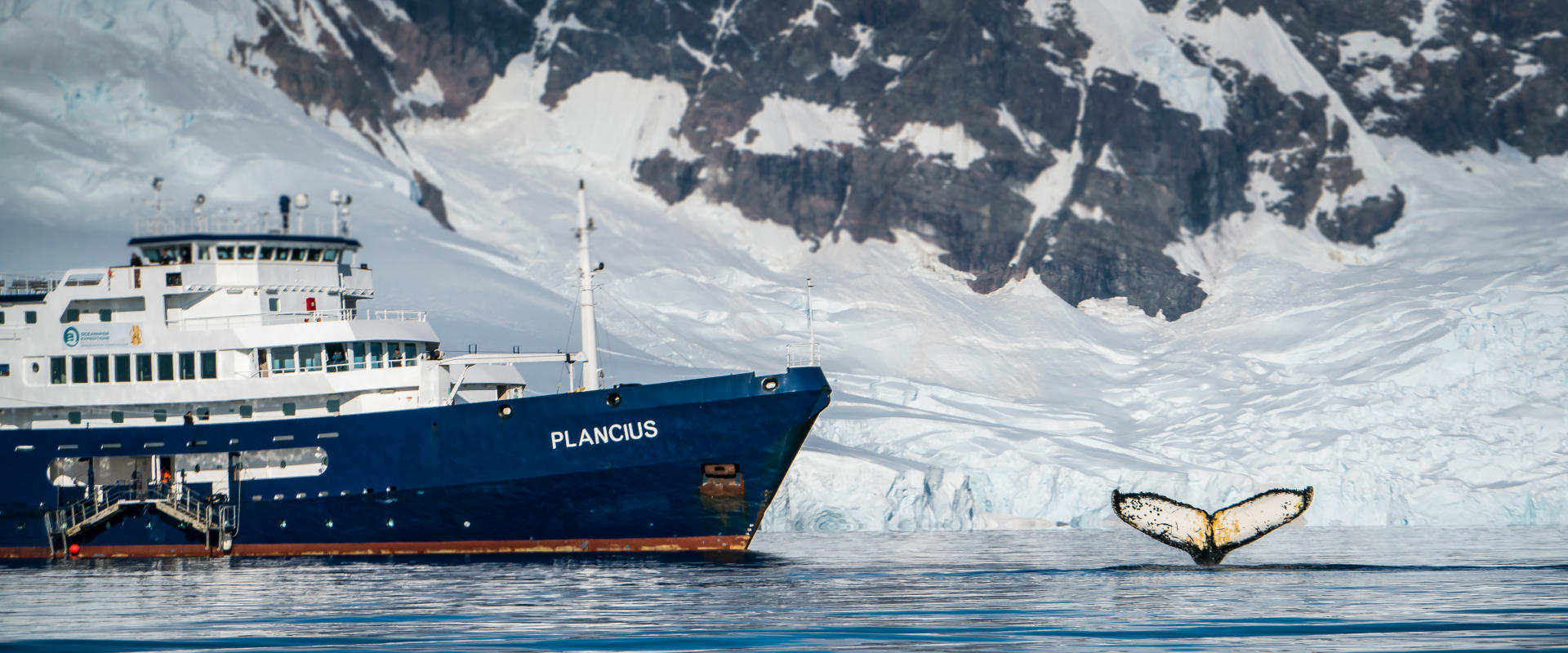
🚢 Plancius
Plancius is a former oceanographic research vessel converted for polar expedition cruising. It accommodates up to 108 passengers in 50 cabins and retains the functional character of a working expedition ship.
Selected Plancius Antarctica voyages offer shallow Zodiac and shore diving around the Antarctic Peninsula and nearby islands. Divers may descend alongside ice floes, rocky coastlines, kelp beds, submerged walls, and seabeds inhabited by cold-water invertebrates. The expedition team aims to organize one or two dives per day when ice and weather permit. The Antarctic program may be combined with visits to penguin colonies, Zodiac cruises among icebergs, whale watching, and guided landings.
During the northern season, Plancius operates selected Arctic diving expeditions around Svalbard and Spitsbergen. These voyages combine drysuit diving with glacier viewing, tundra walks, Zodiac exploration, and searches for Arctic wildlife. Its research-vessel heritage, practical onboard layout, and strong focus on outdoor exploration make Plancius well suited to divers seeking a classic polar expedition experience.
Best suited to: Experienced divers who prefer a traditional expedition-ship atmosphere and a choice of Arctic or Antarctic diving programs.
Antarctica Diving Expeditions
Hondius, Ortelius, and Plancius offer selected diving departures during the Antarctic expedition season. Most programs focus on the Antarctic Peninsula and the surrounding island groups, although the exact route varies by departure.
Antarctic diving reveals a landscape that is as striking beneath the water as it is above it. Grounded icebergs form blue-white walls and overhangs, while rocky slopes support sponges, sea stars, isopods, nudibranchs, anemones, crustaceans, and other organisms adapted to extreme cold.
Diving is generally shallow and may take place from a Zodiac, from shore, beside ice formations, or along sheltered coastal walls. Water temperatures can fall below 0°C, making reliable drysuit protection, thermal layers, freeze-protected regulators, and strong cold-water skills essential.
Antarctic wildlife is unpredictable. Divers may occasionally encounter penguins, fur seals, or leopard seals underwater, but these interactions cannot be planned. The primary focus is the unusual ice scenery, the marine ecosystem, and the experience of diving in one of the world’s most remote regions.
Arctic Diving Expeditions
Ortelius and Plancius offer selected Arctic diving programs, particularly around Svalbard and Spitsbergen. These voyages normally operate during the northern summer, when longer daylight hours and more navigable coastal waters support expedition activities.
Arctic diving may include rocky walls, kelp forests, shallow coastal sites, submerged ice, and cold-water marine organisms. Conditions differ considerably between locations, and visibility can be affected by plankton, glacial sediment, sea ice, and weather. Above water, Arctic voyages may provide opportunities to see glaciers, walruses, seals, whales, seabirds, reindeer, Arctic foxes, and polar bears. Wildlife searches, Zodiac cruises, and tundra walks form an important part of the overall experience.
Polar bear safety requirements mean Arctic landings are closely controlled by the expedition team. Guests must remain with their guides and follow all instructions while ashore.
Life Aboard the Oceanwide Expeditions Diving Fleet
A typical expedition day begins with an update on the ship’s location, weather, ice, planned activities, and expected wildlife. Divers receive a separate briefing covering the site, entry and exit procedures, maximum depth, currents, underwater terrain, and Zodiac arrangements.
After diving, guests return to the ship to warm up, store their equipment, eat, attend lectures, or observe the surrounding landscape from the lounges and open decks. The daily schedule remains flexible so the expedition team can respond to changing conditions. Meals, presentations, and social time are arranged around the expedition program. The onboard atmosphere is informal and focused on exploration rather than conventional cruise entertainment.
Preparing for an Oceanwide Polar Diving Voyage
All personal diving equipment should be tested during several cold-water dives before departure. The polar regions are not suitable places to experiment with a new drysuit, unfamiliar regulators, an untested buoyancy system, or recently purchased accessories.
Divers should carry spare mask straps, drysuit seals, repair materials, regulator components, batteries, and other small parts that may be difficult to replace during the voyage. Warm waterproof gloves and a hat are also important before and immediately after each dive.
Travel insurance should provide suitable coverage for polar expedition travel and the planned diving activity. Divers should also consider airline baggage restrictions well before departure because a complete cold-water equipment setup can be heavy.
Explore the Oceanwide Expeditions Diving Fleet
The Oceanwide Expeditions diving fleet gives experienced drysuit divers access to some of the world’s least-explored underwater environments. Hondius, Ortelius, and Plancius combine specialist polar diving with wildlife encounters, Zodiac exploration, guided landings, and expert-led expedition cruising.
Compare the Arctic and Antarctic programs, departure dates, cabin categories, voyage lengths, and experience requirements to find the most suitable expedition.
Whether diving beside Antarctic ice, exploring the cold coastal waters of Svalbard, or observing polar wildlife from the ship and Zodiacs, each voyage offers a rare perspective on the frozen regions above and below the surface.
What to know about Oceanwide Expeditions
How many ships are in the Oceanwide Expeditions fleet?
Oceanwide Expeditions operates four ships: Hondius, Ortelius, Plancius, and Rembrandt van Rijn. Hondius, Ortelius, and Plancius sail in both the Arctic and Antarctica, while Rembrandt van Rijn specializes in Arctic voyages.
Which Oceanwide Expeditions ships cruise to Antarctica?
Hondius, Ortelius, and Plancius operate expedition cruises in Antarctica. Their itineraries may explore the Antarctic Peninsula, South Shetland Islands, Weddell Sea, Antarctic Circle, Falkland Islands, and South Georgia.
Which Oceanwide Expeditions ships cruise in the Arctic?
All four Oceanwide Expeditions ships operate in the Arctic. Hondius, Ortelius, and Plancius offer motorized expedition cruises, while Rembrandt van Rijn provides small-group sailing voyages in destinations such as Svalbard and Greenland.
What is the largest ship in the Oceanwide Expeditions fleet?
Hondius is the largest Oceanwide Expeditions ship, accommodating up to 170 passengers in 80 cabins. It is also the fleet’s most modern, purpose-built polar expedition vessel.
What is the smallest Oceanwide Expeditions ship?
Rembrandt van Rijn is the smallest vessel in the fleet, carrying up to 33 passengers in 16 cabins. Its limited capacity creates an intimate atmosphere and allows guests to participate in excursions as one expedition group.
Which Oceanwide Expeditions ship offers the most modern facilities?
Hondius offers the fleet’s most contemporary design and the widest range of accommodation. Cabin options include shared cabins, twins, superior cabins, junior suites, and grand suites with private balconies.
Which Oceanwide Expeditions ship has a traditional expedition atmosphere?
Ortelius and Plancius offer the most traditional expedition-ship experience. Both are ice-strengthened vessels with practical facilities, observation areas, lecture rooms, and a strong focus on outdoor exploration.
Which Oceanwide Expeditions ship is a sailing vessel?
Rembrandt van Rijn is a three-masted schooner that operates Arctic voyages. When weather and sailing conditions are suitable, the vessel may travel under sail for part of the expedition.
Are Oceanwide Expeditions cruises luxury cruises?
Oceanwide Expeditions focuses on active exploration, wildlife, and time ashore rather than conventional luxury cruising. The ships provide comfortable en-suite accommodation, restaurants, lounges, bars, and observation areas, but the overall atmosphere is informal and expedition-led.
What activities are available aboard Oceanwide Expeditions ships?
Standard expedition activities may include Zodiac cruises, guided shore landings, wildlife watching, hiking, and educational presentations. Selected departures may also offer kayaking, camping, snowshoeing, mountaineering, photography workshops, or polar diving.
Which Oceanwide Expeditions ship is best for Antarctica?
Hondius is well-suited to travelers seeking modern facilities and varied activities. Ortelius is a strong choice for remote Weddell Sea and specialist expeditions, while Plancius offers a classic polar experience with a strong emphasis on wildlife and outdoor exploration.
Which Oceanwide Expeditions ship is best for the Arctic?
Hondius suits travelers looking for modern facilities and longer Arctic routes. Ortelius and Plancius provide a traditional expedition atmosphere, while Rembrandt van Rijn is ideal for intimate sailing voyages in Svalbard and Greenland.
Can wildlife sightings be guaranteed on Oceanwide Expeditions cruises?
No. Wildlife sightings cannot be guaranteed because animals move freely through their natural environment. Expedition teams use their regional knowledge to identify promising viewing areas while maintaining safe and responsible distances.
Can Oceanwide Expeditions itineraries change during the voyage?
Yes. Routes, landings, and activities may be changed because of weather, sea ice, wildlife movements, safety considerations, or local regulations. This flexibility allows the expedition team to make the best use of the conditions encountered.
How should travelers choose an Oceanwide Expeditions ship?
Travelers should first compare the destination, itinerary, season, voyage length, activities, and cabin availability. The ship’s size and facilities are important, but the route and planned expedition program usually have the greatest influence on the overall experience.